

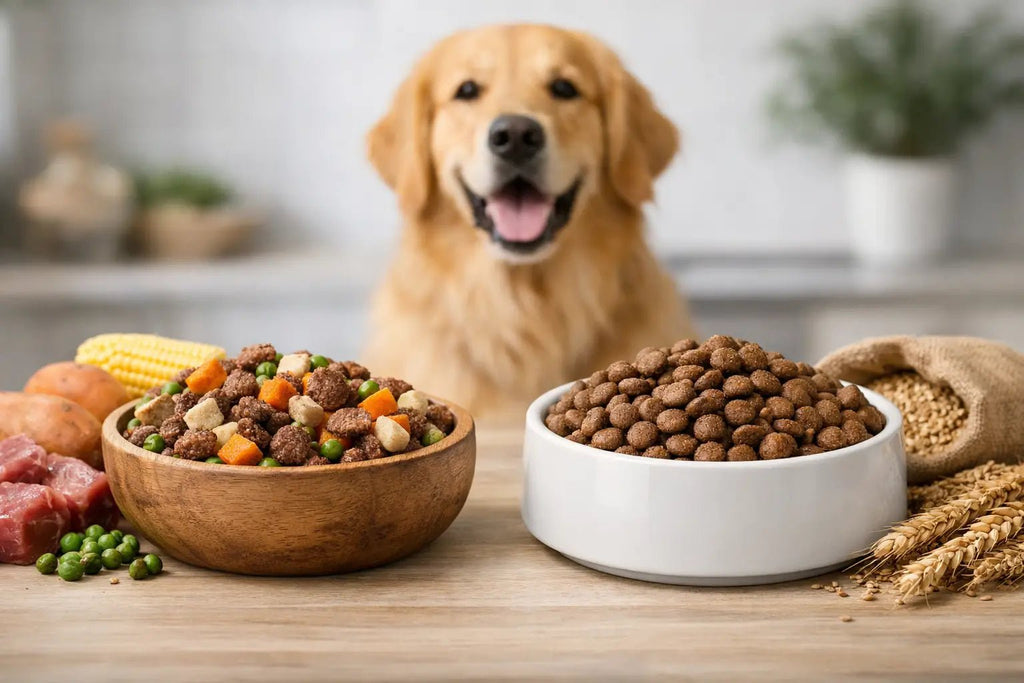
Grain Free Versus Regular Dog Food
Standing in the pet food aisle or scrolling product pages, it is easy to feel stuck between two big labels: grain-free and regular. When pet parents ask about grain free versus regular dog food, they are usually not looking for a trend report. They want to know one simple thing - which option will help their dog feel good, stay healthy, and fit the family budget.
The honest answer is that there is no one-size-fits-all winner. Some dogs do great on regular dog food that includes grains like rice, oats, or barley. Others may do better with a grain-free recipe, especially if a veterinarian has identified a specific sensitivity. The best choice depends on your dog’s health, digestion, activity level, age, and how the food is made.
Grain free versus regular dog food: what is the difference?
Regular dog food usually contains a mix of animal proteins, fats, vitamins, minerals, and carbohydrate sources that may include grains. Common grains in dog food are brown rice, oatmeal, barley, corn, and wheat. These ingredients are often added for energy, fiber, and texture, and many dogs digest them just fine.
Grain-free dog food removes those grain ingredients and replaces them with other carbohydrate sources such as sweet potatoes, peas, lentils, chickpeas, or potatoes. That means grain-free does not mean carb-free. It simply means the recipe uses something other than grains for that part of the formula.
This matters because many pet parents assume grain-free automatically means healthier or more natural. That is not always true. A food is only as good as its overall formulation, ingredient quality, and how well it matches your dog’s needs.
Why regular dog food works well for many dogs
For a lot of healthy dogs, regular dog food is a practical, nutritious choice. Whole grains can provide digestible energy, fiber for healthy stools, and helpful nutrients. When included in a balanced formula, grains are not just filler. They can play a useful role in everyday nutrition.
Regular dog food is also often more budget-friendly than grain-free options. For families trying to balance quality care with everyday costs, that matters. Paying more does not always buy a better fit for your dog.
Another benefit is variety. Regular dog food comes in a wide range of formulas for puppies, adults, seniors, small breeds, and large breeds. That makes it easier to find a food that supports your dog’s life stage without overcomplicating mealtime.
When grain-free dog food may make sense
Grain-free food can be helpful in specific situations, but it should not be treated like a default upgrade. Some dogs have food sensitivities, and in certain cases a veterinarian may suggest avoiding particular grains. If your dog seems to have ongoing itching, ear issues, digestive upset, or poor stool quality, your vet may recommend a food trial to help narrow down the cause.
That said, true grain allergies are less common than many people think. Dogs are more likely to react to certain proteins, such as beef or chicken, than to grains. So if your dog has symptoms, switching to grain-free without guidance may not solve the real issue.
Grain-free food can still be a good option if your dog consistently does better on it. Some pet parents notice improved digestion or stool quality after switching. If your dog is thriving, maintaining a healthy weight, and your veterinarian is comfortable with the formula, that can be a reasonable path.
The health question many pet parents worry about
One reason grain free versus regular dog food gets so much attention is concern about heart health. In recent years, grain-free diets have been discussed in connection with dilated cardiomyopathy, also called DCM, in some dogs. Researchers have looked at whether certain formulas, especially those heavy in legumes or potatoes, may be linked to this heart condition in some cases.
The science is still being studied, and the issue is more complicated than grains versus no grains. It may involve ingredient balance, formulation, nutrient absorption, and breed-specific risk. But this is exactly why pet food choices should never come down to marketing alone.
If you are considering grain-free food, it is smart to ask your veterinarian whether your dog has any breed, health, or lifestyle factors that should affect the decision. Peace of mind is worth a quick conversation.
How to compare labels without getting overwhelmed
A dog food label can look reassuring while still telling you very little unless you know what to check. Start with the guaranteed analysis and ingredient list, but do not stop there. The first few ingredients matter, yet the bigger picture matters more.
Look for a food labeled as complete and balanced for your dog’s life stage. Check whether the protein source is clear and whether the formula includes added vitamins and minerals. Think about your dog’s real-life response too. Healthy skin, a shiny coat, steady energy, and solid stools tell you more than a trendy package ever will.
With grain-free foods, pay attention to what replaces the grains. If the recipe leans heavily on peas, lentils, or potatoes, that is worth noticing. With regular foods, look at the grain sources used and whether the formula appears thoughtfully balanced rather than packed with low-value fillers.
Grain free versus regular dog food for sensitive stomachs
Sensitive stomachs are one of the biggest reasons pet parents consider a switch. But digestion problems are tricky because they can come from many causes, including sudden diet changes, treats, table scraps, stress, infections, or ingredients unrelated to grains.
If your dog has a sensitive stomach, the best move is usually a slow transition to a simpler, highly digestible formula rather than chasing one label claim. Some dogs do well on regular food with rice and oatmeal because those ingredients are gentle and easy to digest. Others may feel better on a grain-free option with a limited ingredient recipe.
This is one of those times when “it depends” is the right answer. The label category matters less than whether the food is consistent, balanced, and easy on your dog’s system.
Cost matters, and that is okay
Pet parents should never feel guilty for thinking about price. Feeding your dog well is about consistency and quality, not the most expensive bag on the shelf. Grain-free recipes often cost more, sometimes significantly more, and that extra cost is not always necessary.
If your dog is healthy, happy, and doing well on a regular formula, there may be no reason to upgrade. A dependable food that works for your dog and fits your monthly budget is a smart choice. Reliable care is better than stretching too far for a formula your dog may not even need.
That value-minded mindset is part of making pet parenting easier. Good nutrition should feel manageable, not stressful.
How to choose the right food for your dog
If you are deciding between grain-free and regular dog food, start with your dog, not the trend. Think about age, breed size, activity level, stool quality, skin condition, and any history of allergies or stomach trouble. If your dog has no symptoms and does well on a regular diet, staying with it is often perfectly reasonable.
If your dog has recurring issues, talk with your veterinarian before making a major change. A guided food trial can help you avoid guesswork and save money over time. Randomly switching foods every few weeks usually creates more confusion, not more answers.
When you do change foods, transition slowly over about a week by mixing the new food with the old. That gives your dog’s digestive system time to adjust and lowers the chance of stomach upset.
What matters most in the end
The real comparison in grain free versus regular dog food is not about which label sounds better. It is about which food keeps your dog feeling their best day after day. A balanced regular formula can be a great choice. A well-made grain-free formula can also be the right fit in some cases. The goal is not to follow hype. The goal is a happy dog, a comfortable routine, and a food you can feel good serving every day.
If you keep that standard in mind, choosing gets a lot less confusing and a lot more caring.
Related post

23
Jun


19
Jun

17
Jun
15
Jun
