

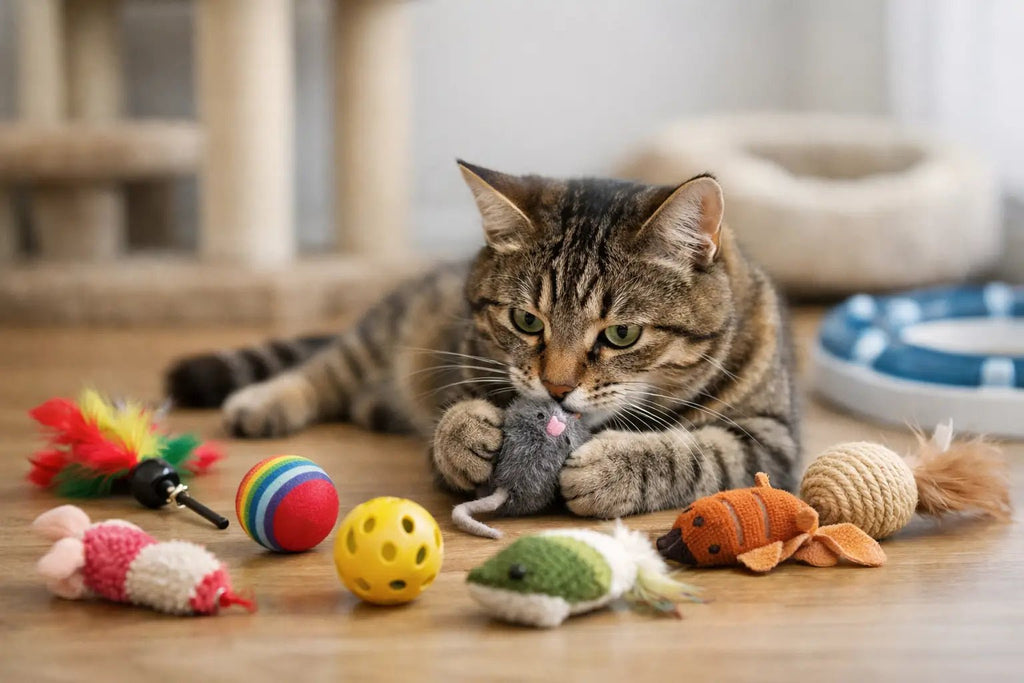
How to Choose Cat Toys That Cats Love
A toy your cat ignores after 30 seconds is not a bargain, even if the price looked great. When pet parents ask how to choose cat toys, the real question is usually simpler: what will keep my cat happy, active, and safe without wasting money on a pile of forgotten fluff?
The good news is that most cats do not need an overflowing toy basket. They need the right mix of movement, texture, and challenge. A shy indoor cat, a wild little kitten, and a mellow senior will not play the same way, so choosing well starts with your cat instead of the packaging.
How to Choose Cat Toys Based on Play Style
Cats play as practice for real hunting behaviors. That is why one cat goes crazy for a wand toy while another would rather stalk a ball under the couch for an hour. If you watch how your cat already moves, you can buy smarter.
Some cats are chasers. They sprint after rolling balls, toy mice, and anything that skitters across the floor. These cats usually enjoy lightweight toys they can bat, chase, and carry away like a prize. If your cat gets the zoomies in the evening, this is often the best place to start.
Other cats are stalkers and pouncers. They hide behind furniture, wiggle their back end, and launch. For them, toys that move unpredictably tend to be more exciting than toys that just sit there. Wand toys, kicker toys, and soft prey-shaped toys often work well because they trigger that hunt-catch feeling.
Then there are grab-and-kick cats. These cats love to clutch a toy with their front paws and kick with their back feet. Longer plush toys and soft catnip kickers can be a better fit than tiny balls. A small toy may still interest them, but it will not satisfy that full-body style of play.
Puzzle-loving cats are different again. They want to work for the reward. Treat toys and simple interactive toys can help keep them busy, especially in indoor homes where boredom builds up fast. These toys are great for mental stimulation, but only if your cat is food-motivated or naturally curious.
Age Matters More Than Many People Think
Kittens usually want movement, movement, and more movement. They burn energy quickly and tend to like smaller, lighter toys they can chase easily. The trade-off is that kittens can also be rough and reckless, so durability matters. If a toy starts shedding pieces after one play session, it is not a good kitten toy.
Adult cats often settle into clear preferences. This is the easiest stage for figuring out what to buy because your cat has probably already told you. If they always steal hair ties, they may want bat-and-chase toys. If they leap for hoodie strings, they may want a teaser or wand toy. You do not have to guess from scratch.
Senior cats still need play, but they may need a gentler version of it. A cat with stiffness or lower energy might ignore toys that require sprinting across the house. Softer toys, slower teaser sessions, and toys with catnip or crinkle sounds can bring more interest without asking too much physically. For older cats, short and satisfying play sessions usually work better than intense ones.
Safety Comes First When You Choose Cat Toys
Fun matters, but safety comes first every time. Cats chew, claw, bite, and swallow things you would never expect. A toy that looks cute in a photo can become a problem if parts pull off easily.
Check for loose feathers, glued-on eyes, dangling strings, weak seams, and tiny pieces that could break free. Some cats can be trusted with almost anything soft. Others are determined little destroyers who can tear through a plush toy in one sitting. If that sounds familiar, sturdier toys with fewer add-ons are a better buy.
String-like toys need extra caution. Ribbon, elastic cord, and long strands can be great during supervised play, but they should not be left out if your cat might chew or swallow them. The same goes for wand toys. They are wonderful for bonding and exercise, but they are not usually a leave-out-all-day option.
Material matters too. Soft fabric is fine for many cats, while rougher textures can appeal to scratchers and kickers. If your cat has a habit of chewing fabric, inspect toys often and replace them when they start to fray. Saving money is great, but replacing an unsafe toy early is always cheaper than dealing with an emergency.
How to Build a Balanced Toy Mix
If you want to know how to choose cat toys without overbuying, think in categories instead of buying ten versions of the same thing. Most cats do well with a simple mix that covers solo play, interactive play, and comfort-based play.
A few toss-and-chase toys help with independent play. A wand or teaser supports active time with you. A plush or kicker toy gives your cat something to grab and wrestle. If your cat gets bored easily, one treat puzzle or motion-based toy can round things out.
That mix works because it fits real life. Some days you have ten minutes to play together. Other days your cat needs something to do while you work, cook, or help the kids with homework. A balanced toy selection gives you options without cluttering the house.
Indoor Cats Usually Need More Stimulation
Indoor cats are safer in many ways, but they can miss out on the variety and challenge they would naturally have outdoors. That is where toys matter most. The right toys do more than entertain. They help reduce boredom, frustration, and some behavior problems that start when a cat has too much unused energy.
If your indoor cat scratches furniture, attacks ankles, or wakes up ready to party at 3 a.m., the issue may not be bad behavior. It may be a lack of satisfying play. Toys that mimic prey movement, plus short daily play sessions, can help take the edge off.
For single-cat homes, this matters even more. A cat without another animal to interact with may need more enrichment from toys and people. That does not mean you need expensive gadgets. It means choosing toys that actually match your cat’s instincts and rotating them often enough to keep them interesting.
Price Matters, but Value Matters More
Everyday pet parents want quality without overspending, and that is a smart way to shop. The cheapest toy is not always the best deal if it falls apart quickly or never gets used. On the other hand, the most expensive option is not automatically better either.
Look for toys that offer a clear benefit: movement, durability, comfort, or mental stimulation. A simple ball your cat loves is a better purchase than a fancy electronic toy that scares them. Start small when trying a new toy type. Once you know what your cat enjoys, you can buy with more confidence.
This is especially helpful in multi-cat homes. One cat may love crinkle toys while another only wants catnip kickers. Buying a variety in moderation often saves more than betting big on one style that only one cat likes.
Common Mistakes Pet Parents Make
One common mistake is choosing toys based on what looks cute instead of what the cat will actually use. Another is leaving every toy out all the time. Cats can get bored when nothing feels new anymore.
Rotation helps. Put a few toys away and bring them back a week later. That small change can make an old favorite feel exciting again. It is an easy, budget-friendly way to keep play fresh.
Another mistake is assuming all cats love catnip. Many do, but some do not respond much to it. If catnip toys get ignored, try crinkle textures, silvervine, or toys with more movement instead.
A Simple Way to Test What Your Cat Likes
If you are still unsure how to choose cat toys, do a little trial run at home. Notice whether your cat responds more to rolling, dangling, crinkling, or kicking. Pay attention to when they play too. Some cats want action at sunrise and sunset, while others are more playful after meals or during quiet evening hours.
Once you know those patterns, shopping gets easier. You stop buying random toys and start choosing ones that fit your cat’s body, age, energy level, and instincts. That means more play, less waste, and a happier home overall.
At Souths Pet Supplys, we believe pet care should feel simple, comforting, and affordable. When you choose toys with your cat’s real needs in mind, you are not just filling a basket. You are making everyday life a little more active, a little more joyful, and a lot more fun for the family member with whiskers.
Related post
23
Jun

19
Jun

17
Jun

15
Jun
