Cat Food Storage Tips That Keep Food Fresh
That half-open bag of kibble folded over with a chip clip might look fine on the counter, but cat food starts losing freshness faster than many pet parents realize. Good cat food storage tips are not just about neat shelves - they help protect flavor, texture, and safety, which matters when you have a picky eater or a cat with a sensitive stomach.
If your cat suddenly seems less interested in meals, storage could be part of the problem. Air, moisture, heat, and light all work against pet food once the package is opened. The good news is that a few simple habits can make feeding easier, reduce waste, and help you get the most value from every bag or can.
Why cat food storage tips matter more than people think
Cat food is made with fats, proteins, vitamins, and minerals that need proper handling after opening. When dry food sits out in a warm kitchen or wet food is left uncovered in the fridge, quality can drop quickly. Sometimes the change is obvious, like a stale smell or dried-out texture. Other times, it is subtle, and your cat notices before you do.
Fresh food tends to smell better and taste better, which is a big deal for cats because they rely heavily on scent when deciding whether a meal is worth eating. Proper storage also helps reduce the chance of contamination from moisture, pests, or bacteria. For budget-minded households, that matters twice - spoiled food is money in the trash.
How to store dry cat food the right way
Dry cat food is convenient, but it is not invincible. One of the best habits is keeping kibble in its original bag instead of pouring it directly into a container. The bag is designed to help protect the food, and it includes important details like the expiration date, batch code, and feeding information.
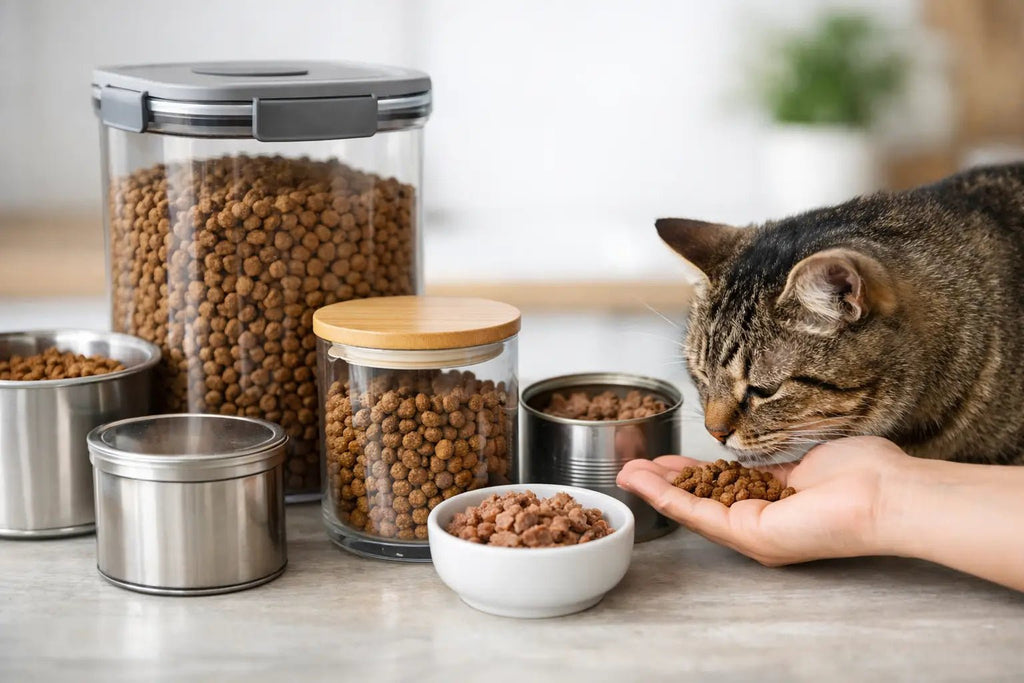
If you prefer a container for convenience, place the whole bag inside an airtight one. That gives you the structure and ease of a bin without exposing the kibble to leftover oils or residue that can build up on container walls over time. It also makes it easier to track freshness.
Store dry food in a cool, dry place away from direct sunlight. A pantry, cabinet, or closed storage area is usually better than a garage, laundry room, or porch. Heat can break down nutrients and speed up fat oxidation, which affects both smell and taste. Humidity is another problem because it can lead to mold or spoilage.
Airtight matters, but location matters too. Even the best container will not help much if it sits next to a stove or in a space that gets hot every afternoon.
The best temperature for dry food
Room temperature is usually ideal, as long as the room stays fairly stable. You do not need to refrigerate dry cat food, and doing so can actually create moisture issues when the food is brought back out. Think cool, dry, and shaded rather than cold.
How long dry food stays fresh after opening
It depends on the brand, ingredients, and storage conditions, but many dry foods are best used within about four to six weeks after opening. If you buy very large bags to save money, make sure your cat can actually finish them in a reasonable time. The lowest price per pound is not always the best value if the last third of the bag goes stale.
Storing wet cat food without waste
Wet cat food needs more careful handling once opened. An unopened can or tray can usually stay in the pantry until its printed date, but after opening, leftovers should be covered and refrigerated promptly. Leaving wet food out too long gives bacteria too much opportunity.
A simple rule for most homes is this: if your cat has not finished the meal within one to two hours, it is better to discard the rest, especially in warm weather. For refrigerated leftovers, transfer the food to a clean airtight container or use a tight-fitting cover made for pet food cans.
Most opened wet cat food should be used within three days in the refrigerator. Some pet parents stretch it longer, but that is one of those areas where saving a little can backfire. If the food smells off, changes color, or gets watery in a strange way, it is time to toss it.
Should wet cat food be served cold?
Many cats prefer wet food closer to room temperature because it smells stronger and feels more natural to eat. If you store leftovers in the fridge, let the portion sit out briefly before serving, or warm it slightly according to the food maker's guidance. It should be gently warmed, not hot.
Common cat food storage mistakes
A lot of storage problems come from habits that seem harmless. Rolling down the top of a dry food bag and hoping for the best is common, but it still lets in air. Scooping food with a wet measuring cup can introduce moisture. Keeping food near a sunny window can quietly damage quality over time.
Another easy mistake is mixing old food and new food in the same container. That sounds efficient, but it can leave stale crumbs and oils in contact with the fresh batch. It is better to finish the old food, wash and dry the container fully, and then refill.
Bulk buying can also be a mixed bag. It is great when you have storage space and a cat that eats consistently, but not every household benefits from the biggest bag on the shelf. If freshness drops before the food is finished, the savings disappear.
Choosing the right storage containers
Not every food container is equal. Look for one that closes tightly, is easy to clean, and fits your feeding routine. If the lid is annoying to open, there is a good chance it will stop getting used properly after a week.
Food-safe plastic and stainless steel are both practical choices. Plastic tends to be lightweight and affordable, while stainless steel may resist lingering odors and scratches better over time. What matters most is cleanliness and a secure seal.
If you use a scoop, keep it clean and dry, and store it separately or in a way that does not contaminate the food. Small details like that help more than people expect.
Cat food storage tips for multi-cat homes
If you have more than one cat, food management gets trickier fast. Different diets, different feeding speeds, and different preferences can make storage feel less organized. Labeling containers or sections of your pantry can help avoid mix-ups, especially if one cat eats a sensitive stomach formula or a prescription diet.
Portioning ahead can also help. Instead of opening and handling food multiple times a day with a lot of guesswork, you can prep a day or two of measured meals for easier feeding. That cuts down on overpouring and keeps your routine cleaner.
In busy homes, the best system is usually the one that is easy enough to stick with. Fancy storage setups are not necessary if a simple, reliable routine keeps food fresh and meals stress-free.
Signs your cat food may not be fresh anymore
Your cat may tell you before the packaging does. If your usually eager eater starts sniffing and walking away, stale food could be part of the issue. Dry food that smells flat, oily, or unusual should be replaced. Wet food that looks dried out around the edges, separated in an odd way, or smells sour should not be served.
Also pay attention to the container itself. If it smells rancid even after food is gone, it is probably overdue for a thorough wash. A fresh bag poured into a dirty bin is not really getting a fresh start.
A simple routine that works
The easiest cat food storage tips are often the most effective. Keep dry food in its original bag inside an airtight container. Store it in a cool indoor spot. Refrigerate opened wet food quickly and use it within three days. Wash containers between refills, and buy amounts your cat can finish while the food is still at its best.
At Souths Pet Supplys, we know pet care feels better when it is simple, affordable, and built around your pet's comfort. A smart storage routine protects your cat's meals, cuts down on waste, and helps every scoop or serving stay closer to the way it was meant to be.
Fresh food is one of those small everyday wins that can make pet parenting easier. And when your cat actually finishes dinner without a suspicious stare, that is a pretty nice win too.
Related post
13
Jun

11
Jun
09
Jun

07
Jun