
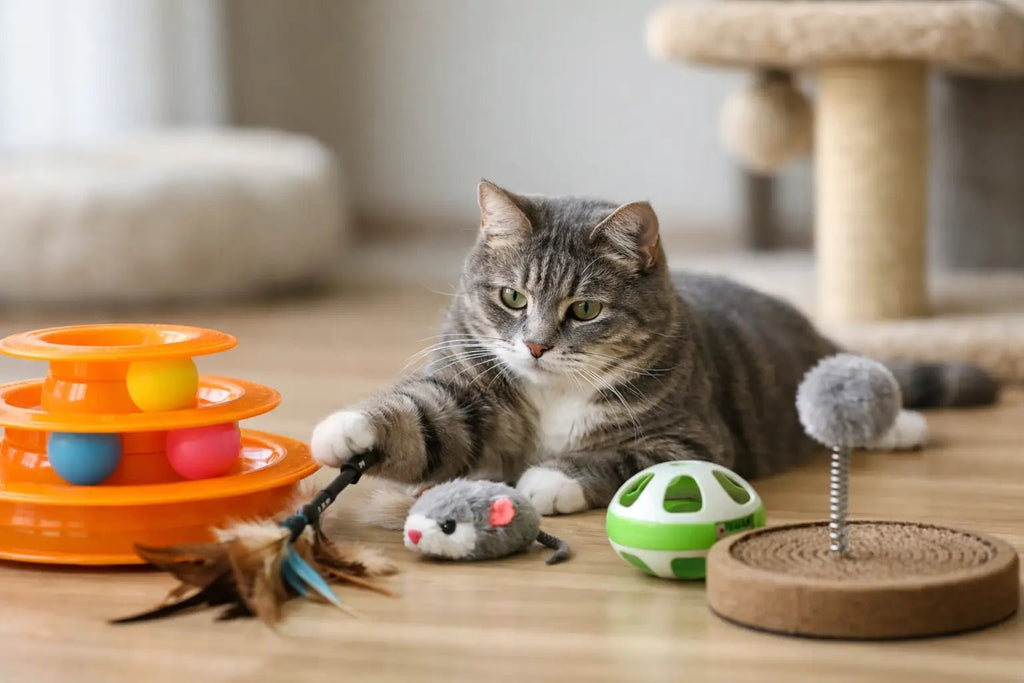
10 Best Cat Toys for Indoor Cats
A bored indoor cat usually does not keep that feeling to themselves. You see it in the midnight zoomies, the curtain climbing, the plant nibbling, or the dramatic stare from across the room that somehow means, entertain me now. The best cat toys for indoor cats do more than fill a basket - they give your cat a healthy way to hunt, pounce, climb, chase, and settle down.
Indoor cats often live safer lives, but they also rely on us to bring the outside world's variety into the home. That means the right toy is not just a treat. It is part exercise, part mental workout, and part comfort routine. If you are trying to choose toys that keep your cat happy without overspending, it helps to know what each type of toy actually does well.
What indoor cats really need from a toy
Most cats are not looking for constant excitement. They want short bursts of action that match their natural instincts. Good toys support stalking, chasing, batting, grabbing, and chewing. Great ones also fit your cat's age, energy level, and play style.
A young, active cat may love toys that move fast and unpredictably. A senior cat may prefer something softer, slower, or easier to catch. Some cats want interactive play with you, while others prefer solo toys they can tackle while you answer emails or make dinner. That is why the best cat toys for indoor cats are usually a mix, not a single magic item.
Wand toys are still the gold standard
If you only buy one toy, make it a wand toy. A simple wand with feathers, ribbons, or a soft lure gives you the easiest way to mimic prey movement. You can make it dart, hide, pause, and then sprint again, which feels much more natural to a cat than just waving it in their face.
Wand toys are especially useful for indoor cats that need more exercise but are not interested in playing alone. They build connection, help burn off energy, and can redirect rough behavior away from ankles and hands. The trade-off is simple - they work best when you are part of the game, and they should be put away after play so strings and attachments do not become a safety issue.
Ball toys work best when they do something extra
Plain plastic balls can be hit or miss. Some cats bat them once and walk away. Others become tiny athletes. The better option for many homes is a ball with a bell, texture, crinkle sound, or an uneven bounce.
These small toys are affordable, easy to rotate, and great for solo play. They fit cats that like to chase movement down hallways or under furniture. The downside is that they disappear fast, usually under the couch, and some noisy versions can be less fun for humans at 2 a.m. If your cat loses interest quickly, try changing the texture or size before assuming they do not like ball toys at all.
Catnip toys are great, but not for every cat
Soft catnip toys can turn an ordinary afternoon into a full wrestling match. They are ideal for cats that like to kick with their back legs, bite, and roll around. Many come in shapes that are easy to grab, such as fish, mice, or long plush sticks.
That said, not every cat responds to catnip. Kittens often do not react to it yet, and some adult cats simply do not care. If that sounds familiar, silvervine is another option many cats enjoy. This is one of those areas where it depends on the individual cat, so buying one or two affordable options first makes more sense than stocking up on a whole set.
Puzzle toys help with boredom and snacking habits
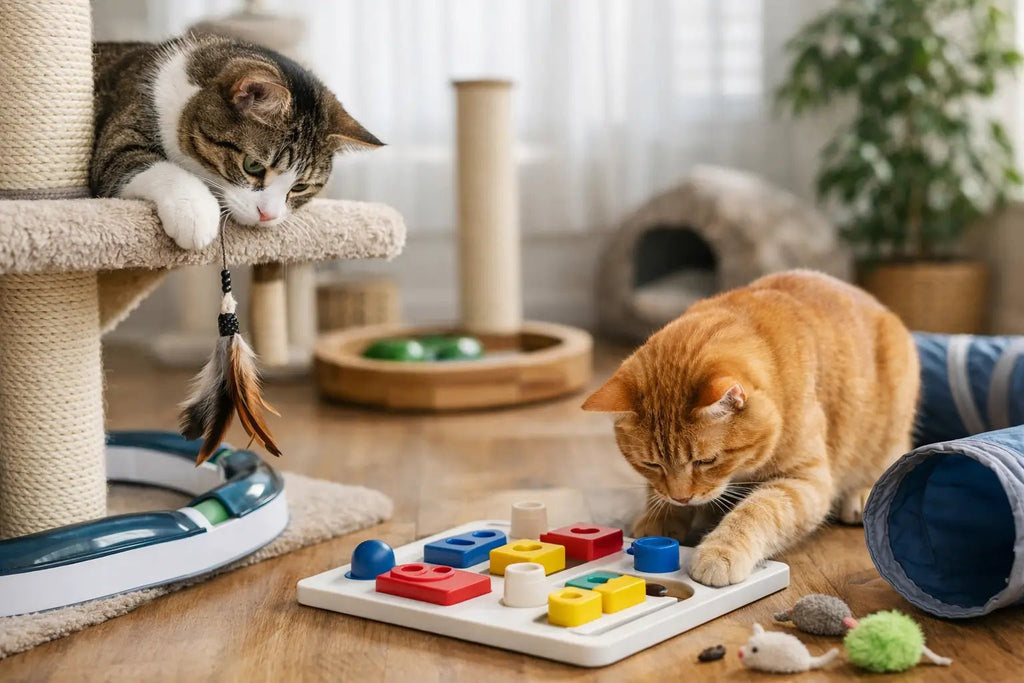
Food puzzles are one of the smartest picks for indoor cats, especially if your cat eats too fast or begs for food out of boredom. These toys make cats work a little for kibble or treats by batting, sliding, or digging pieces out.
They turn mealtime into enrichment, which is useful for cats who need more mental stimulation than standard toys provide. They can also slow down enthusiastic eaters. The only catch is that some cats get frustrated if the puzzle is too hard too soon. Start simple, then increase the challenge once they understand the idea.
Track toys are a strong choice for independent cats
Track toys with enclosed balls can keep a cat busy without much setup. Since the ball stays inside the track, it keeps rolling back instead of disappearing under furniture. For many indoor cats, that repeated movement is satisfying enough to trigger batting and chasing over and over.
These toys are helpful for solo play and can be a nice fit in homes where your cat is alone for part of the day. They are not the most realistic hunting experience, though, so some cats treat them as a quick novelty rather than a long-term favorite. They tend to work best when rotated with more interactive toys.
Kickers and plush toys are underrated
A lot of cat parents focus on fast-moving toys, but plush kickers deserve more credit. These longer soft toys give cats something appropriate to grab, bite, and bunny-kick. That can be especially helpful for cats who get overstimulated during play and need a safe outlet for rougher instincts.
They are also a comfort item for some cats. A soft plush toy can become part play object, part nap companion. Look for durable stitching and materials that can handle chewing and clawing. If your cat is a destroyer, inspect plush toys regularly and replace them once seams start to fail.
Teaser mice and small prey toys tap into hunting instinct
Tiny mice, pom-poms, and faux prey toys often do exactly what indoor cats want - they let them stalk something that looks catchable. These are good for tossing, hiding, and rotating around the house to keep your cat curious.
Because they are light and simple, they are often among the most budget-friendly options too. That makes them a smart buy for households trying to keep playtime fresh without spending a lot. Just keep size and safety in mind. Anything with small parts that can detach should be supervised or skipped.
Electronic toys can help, but they are not a cure-all
Motion-activated toys, rolling gadgets, and fluttering electronic toys can be useful for high-energy cats, especially when you need help creating activity during the day. They add unpredictability, which matters because cats usually lose interest when movement becomes too repetitive.
Still, electronic does not always mean better. Some cats are fascinated by them, while others are startled or bored after a few minutes. Battery-powered toys also cost more and may not hold up as well as simpler options. Think of them as one part of a toy mix, not the whole plan.
Tunnels and crinkle toys make play feel bigger
A tunnel is technically not a toy in the traditional sense, but many indoor cats treat it like one. It gives them a place to hide, ambush, sprint through, and nap inside afterward. Add a crinkle texture and it gets even more exciting.
Tunnels are especially good for multi-cat homes because they create shared play spaces without forcing direct contact. They also pair well with wands, balls, and mice, turning a basic toy into a mini hunt. If storage matters, collapsible tunnels are the practical choice.
How to choose the best cat toys for indoor cats
The easiest mistake is buying based on what looks cute instead of what your cat actually enjoys. Watch how your cat already plays. If they chase shadows, choose fast-moving toys. If they hide and pounce, try tunnels and prey-style toys. If they love your hoodie strings, a wand toy is probably a safe bet.
It also helps to think in terms of categories instead of individual products. A balanced toy setup usually includes one interactive toy, one solo toy, one comfort or kicker toy, and one enrichment option like a puzzle feeder. That gives your cat variety without filling every drawer in the house with abandoned toys.
Price matters too, and reasonably priced toys can work just as well as premium ones when the design matches your cat's instincts. At Souths Pet Supplys, that balance between quality, comfort, and everyday value is what makes shopping easier for pet parents who want happy pets without overcomplicating the basics.
A few safety checks are worth the effort
No matter how fun a toy is, safety comes first. Check for loose feathers, bells, strings, stuffing, or plastic pieces that could come off during rough play. Replace damaged toys before they become a risk.
It is also smart to rotate toys instead of leaving every option out all the time. Cats get bored with too much access to the same thing. A smaller rotation keeps toys feeling new, and it can save money because you are getting more use out of each one.
The right toy does not need to be fancy. It just needs to make your cat feel curious, active, and satisfied in the space they call home. When you find that mix, your indoor cat gets more than entertainment - they get a daily routine that feels a little more natural, a little more joyful, and a lot more comfortable.
Related post
15
Jul
13
Jul
