
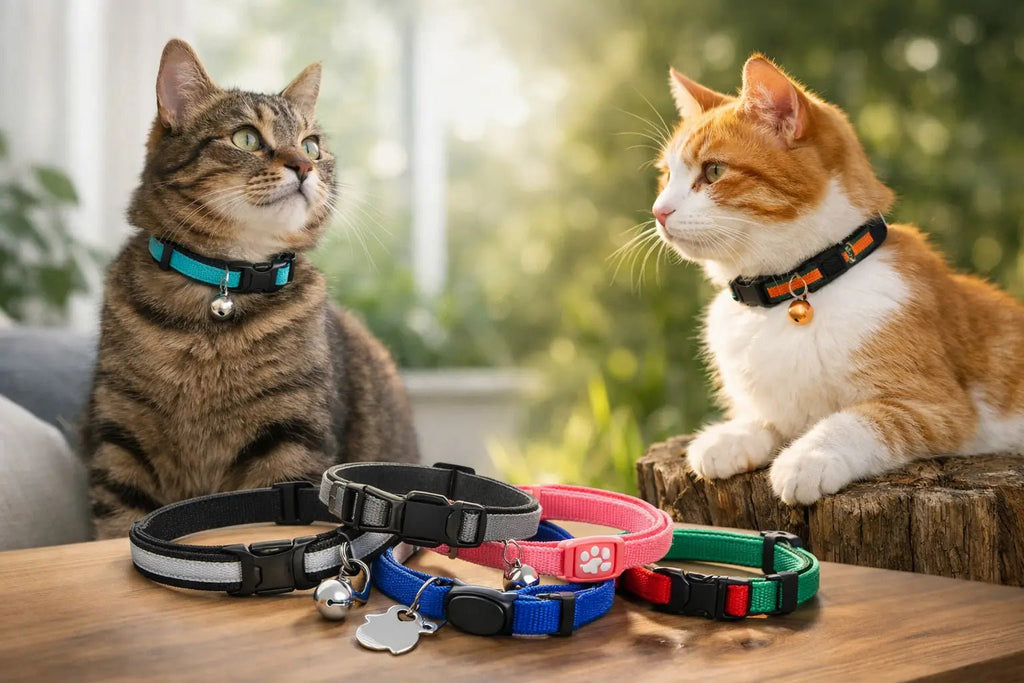
Best Cat Collars Safety for Indoor and Outdoor Cats
A cat collar can look like a small everyday accessory, but the wrong one can snag, tighten, or become uncomfortable fast. For best cat collars safety, start with one simple rule: your cat’s ability to get free matters more than how cute the collar looks. A safe collar should help identify your pet without creating a hazard during naps, playtime, climbing, or curious adventures around the home.
Why Breakaway Collars Matter Most
Cats squeeze behind furniture, jump onto shelves, and slip through spaces that seem far too small. A standard buckle collar can catch on a branch, crate edge, fence, blind cord, or another pet’s teeth during rough play. If it cannot release under pressure, a frightened cat may panic or be injured trying to escape.
That is why a breakaway clasp is the first feature to look for. This type of closure is designed to pop open when the collar is pulled or caught. It may come off occasionally during enthusiastic play, which can feel inconvenient, but that trade-off is usually worth it. A lost collar is replaceable. Your cat’s safety is not.
Choose a collar with a clasp that releases when pulled firmly, but does not fall apart from normal movement. Test it gently before your cat wears it. If the clasp feels impossible to open, it may not provide the protection you expect. If it pops loose with the lightest touch, it may be frustrating for an active cat and easy to lose.
Best Cat Collars Safety Begins With the Right Fit
Even a breakaway collar needs to fit properly. A collar that is too tight can rub the skin, flatten fur, make swallowing uncomfortable, or restrict movement. One that is too loose may slide over your cat’s head or catch on a paw.
The usual guideline is the two-finger check. You should be able to slide two fingers comfortably between the collar and your cat’s neck. This is a starting point, not a set-it-and-forget-it measurement. Kittens grow quickly, long-haired cats can hide a too-tight fit under their coat, and weight changes can alter the fit over time.
Check the collar at least once a week, especially during the first few weeks. Look under the fur for redness, thinning hair, scabs, dampness, or signs that your cat flinches when you touch their neck. If your cat repeatedly scratches at the collar or tries to chew it, pause and investigate. The material, fit, tag weight, or a skin sensitivity could be causing discomfort.
Give New Collars a Gentle Introduction
Some cats accept a collar without a second thought. Others walk low to the ground, scratch dramatically, or act as if the collar has changed the laws of physics. This reaction is common, particularly for cats who have never worn one.
Start with short, supervised wear sessions in a calm room. Offer a treat, a favorite toy, or gentle praise while the collar is on, then remove it after a few minutes. Gradually extend the time as your cat settles in. Do not force a fearful cat to wear a collar for hours on the first day. A patient introduction makes everyday wear much easier for both of you.
Choose Lightweight Materials and Simple Details
The safest collar is usually lightweight, smooth, and uncomplicated. Soft nylon, fabric, or other pet-safe materials can work well when they are finished neatly and do not have rough edges. For cats with sensitive skin, a softer material may be more comfortable than a stiff or heavily textured collar.
Pay attention to the extras. Decorative charms, oversized bows, thick buckles, and heavy metal pieces can make a collar awkward for a small cat. They may also create more places for the collar to catch. A little personality is lovely, but comfort comes first.
Reflective stitching or a reflective strip can be useful for cats who spend time outdoors at dawn, dusk, or nighttime. It may make them easier to spot in headlights or with a flashlight. Reflection is a helpful visibility feature, not a reason to let a cat roam freely after dark. Indoor cats are generally safer, and outdoor time is best managed with secure supervision, a catio, or a carefully fitted harness.
ID Tags Help, but Keep Them Light
An ID tag can make a huge difference if your cat slips out an open door or gets separated from home. A clear tag with your cat’s name and a current phone number gives a neighbor, shelter, or veterinary office a quick way to contact you.
Still, a large jangling tag is not ideal for every cat. The weight and noise can be irritating, and some cats become fixated on chewing or batting it. Consider a small, smooth tag that lies flat, or a collar with identification information printed or stitched directly onto it. Check engraved details regularly because they can wear down over time.
Microchipping adds another layer of protection. A collar can break away exactly as it should in an emergency, while a microchip stays with your cat. Keep the registration details current whenever you move or change phone numbers. A breakaway collar and a registered microchip work especially well together.
Collars and Harnesses Have Different Jobs
A collar is for identification. It is not the best place to attach a leash for walking a cat. Pulling from the neck can be uncomfortable and risky, particularly if your cat suddenly bolts, twists, or reaches the end of the leash.
For outdoor walks, travel, or supervised exploration, choose a cat-specific harness that fits around the chest and body. A harness should still be checked for fit, but it distributes pressure much more safely than a collar. Let your cat practice wearing it indoors before heading outside, and always use a leash in a quiet, controlled area at first.
Never leave a harness on an unsupervised cat. Like any wearable item, it can snag during climbing or play. Remove it once the outing is over.
When a Collar May Not Be the Right Choice
Most cats can wear a properly fitted breakaway collar comfortably, but there are exceptions. A cat recovering from surgery, dealing with a neck wound, experiencing skin irritation, or showing intense ongoing distress may need a break from collar wear. Talk with your veterinarian if you notice persistent scratching, sores, hair loss, or behavior changes.
Very young kittens also need special attention. Their tiny necks grow quickly, and a collar that fit last week may not fit today. If you use one, choose a very light breakaway design and check it often. Some families decide to wait until a kitten is a little bigger, relying on indoor supervision and microchip identification in the meantime.
Multi-cat homes deserve another safety check. Watch how your cats wrestle and groom each other while wearing collars. If one cat frequently gets a paw, jaw, or tooth caught under another cat’s collar, simplify the setup or remove collars during unsupervised play until you find a safer option.
A Quick Safety Check Before Every New Collar
Before buying or putting on a new collar, make sure it has a reliable breakaway clasp, a lightweight feel, smooth material, and enough room for two fingers at the neck. Check that any tag is small and readable, and skip dangling decorations that could get caught. Replace collars that are frayed, cracked, stretched out, or no longer release properly.
At Souths Pet Supplys, we believe everyday pet essentials should bring comfort and peace of mind without stretching the family budget. The right collar is a small choice that supports a much bigger goal: helping your cat feel safe, cared for, and ready for all the cozy naps and curious moments ahead.
Your cat does not need the fanciest collar in the room. They need one that fits gently, releases when it should, and helps a kind person guide them home if they ever wander too far.
Related post


15
Jul
13
Jul
