
How Tight Should a Dog Collar Be?
That little gap between your dog’s neck and their collar matters more than most pet parents think. If you’ve ever wondered how tight should a dog collar be, the short answer is snug enough to stay in place, but loose enough that your dog can breathe, move, and relax comfortably.
A collar that’s too loose can slip off at the worst possible moment. A collar that’s too tight can rub the skin, flatten the fur, and make everyday walks feel stressful instead of safe. The right fit lands in the middle, and once you know what to check, it’s easy to get right.
How tight should a dog collar be for everyday wear?
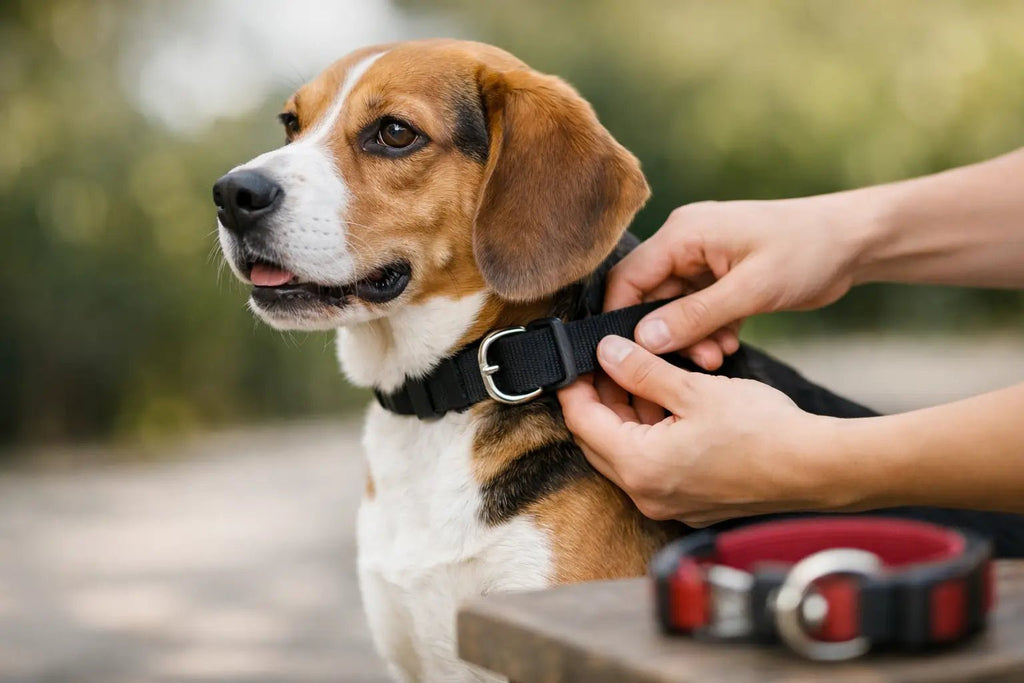
For most dogs, the best rule is the two-finger test. You should be able to slide two fingers comfortably between the collar and your dog’s neck. That means the collar is secure without pressing too tightly against the skin.
This guideline works well because it balances safety and comfort. Your dog should be able to wear the collar during normal daily activity without irritation, while still keeping tags on and staying secure during walks or trips outside.
That said, not every dog fits the rule in exactly the same way. A tiny dog with a delicate neck may need a more careful fit check than a thick-coated dog whose fur makes the collar seem tighter or looser than it really is. Puppies also change quickly, so a collar that fits this week may not fit next month.
Why collar fit matters more than people realize
A dog collar is one of those everyday essentials that can feel simple until it causes a problem. Good fit supports comfort, safety, and peace of mind all at once.
If the collar is too tight, your dog may develop chafing around the neck, hair loss under the strap, or sensitivity when you touch the area. Some dogs become reluctant to have their collar put on because they associate it with discomfort. In more serious cases, a tight collar can put pressure on the throat and make pulling during walks even more unpleasant.
If the collar is too loose, it can rotate too much, catch on something, or slip over your dog’s head. That risk matters most for dogs who startle easily, back out of collars, or have narrow heads compared with their neck size, like Greyhounds and similar breeds.
A properly fitted collar also keeps identification tags where they belong. That simple detail can make a huge difference if your dog ever gets out.
Signs your dog’s collar is too tight
Sometimes the collar tells you it’s too tight before your dog does. Other times, the clues are subtle.
Watch for red marks, flattened fur, rubbing, or missing hair around the neck. If your dog scratches at the collar often, seems uncomfortable when lying down, or resists wearing it, the fit may be part of the problem. You may also notice the collar leaves an impression on the skin after you remove it.
Behavior changes can matter too. A dog who suddenly dislikes walks, paws at their neck, or flinches when you buckle the collar may be telling you something. It doesn’t always mean the collar is too tight, but it’s a good place to start checking.
Signs the collar is too loose
A loose collar can seem harmless because it doesn’t look uncomfortable, but it comes with its own set of risks.
If the collar slides over your dog’s head with little effort, it’s too loose. If it spins all the way around repeatedly, hangs low on the neck, or catches a front leg when your dog scratches, it likely needs tightening. Dogs that pull backward on a leash can escape loose collars faster than many owners expect.
Loose collars can also snag more easily on crates, furniture, or yard objects. For dogs wearing collars at home, that’s one reason fit should be checked just as carefully as it is for walks.
The two-finger rule, with a little nuance
The two-finger rule is a strong starting point, not a law. Finger size varies, dog size varies, and collar materials vary too.
A wide padded collar may feel different from a thin nylon one even when both technically pass the same fit test. A fluffy double coat can hide a collar that’s much tighter than it looks. On the other hand, a very sleek-coated dog may show pressure marks sooner.
The better way to use the rule is this: slide two fingers under the collar and pay attention to resistance. Your fingers should fit without forcing them in, but there should not be so much room that the collar feels roomy or sloppy. Think secure and comfortable, not tight and not dangling.
How to check fit the right way
Start by placing the collar high on your dog’s neck, not drooping toward the shoulders. Fasten it, then slide two fingers underneath. Check from more than one point around the neck, because some collars sit unevenly depending on buckle placement or fur thickness.
Then watch your dog move. Let them walk, sit, lie down, and gently turn their head. A good collar should stay in place without digging in or shifting excessively. If you use the collar with a leash, attach the leash and check the fit again with light tension. Some collars feel fine until pressure is applied.
It’s also smart to remove the collar occasionally and inspect the skin underneath. This matters even more for dogs with long fur, sensitive skin, or thick coats that hide irritation.
How tight should a puppy’s collar be?
Puppies need extra attention because they grow fast and their bodies change shape quickly. A collar that fit perfectly two weeks ago can become too snug before you realize it.
For a puppy, use the same basic two-finger test, but check fit often - at least every few days during periods of rapid growth. Keep an eye out for rubbing, especially if your puppy is still getting used to wearing a collar. Lightweight collars usually work best while they learn.
Puppies also tend to scratch at new gear simply because it feels unfamiliar. If the fit looks right and there’s no rubbing, they may just need time to adjust. But if the scratching continues, reassess both fit and material.
Different collar types can fit differently
Not all collars behave the same way, and that affects how you judge fit.
Flat collars are the standard choice for everyday wear and ID tags. They’re usually the easiest to size correctly and the simplest option for daily comfort.
Martingale collars are designed to tighten slightly when a dog pulls or backs up, which can help prevent escape. They need careful adjustment because the resting fit and the tightened fit both matter. Too loose, and they won’t work properly. Too tight, and they can become uncomfortable fast.
Training collars, slip collars, and prong collars are different conversations entirely and should never be treated like regular all-day collars. If a dog needs walking support, many pet parents find a well-fitted harness offers better comfort and control with less throat pressure.
Common sizing mistakes pet parents make
One of the biggest mistakes is judging fit by appearance alone. A collar can look fine on a fluffy dog and still be too tight underneath all that fur.
Another common issue is setting the fit once and forgetting it. Dogs gain weight, lose weight, grow thicker winter coats, shed seasonally, or simply mature. Collar fit should be rechecked regularly.
Some pet parents also buy a collar based only on breed averages. That’s risky because dogs of the same breed can have very different neck sizes. Measuring your own dog is always the better call.
And sometimes the issue is not size but material. A stiff or rough collar can irritate the skin even when the fit is technically correct. Soft, comfortable materials make daily wear easier for many dogs.
When a harness may be a better choice
A collar is great for holding ID tags and for many calm daily routines, but it’s not always the best tool for leash pressure. If your dog pulls hard, coughs on walks, has a sensitive throat, or belongs to a breed prone to breathing issues, a harness may be the more comfortable option.
That doesn’t mean you should skip the collar entirely. Many pet parents use a collar for identification and a harness for walks, which gives their dog security and comfort at the same time. For everyday essentials like collars, harnesses, and other comfort-focused gear, Souths Pet Supplys aims to make those choices easier without stretching your budget.
A good fit should feel easy
When your dog’s collar fits well, it mostly fades into the background of daily life. Your dog can play, nap, walk, and wag without fuss, and you can clip on a leash or check their tags without second-guessing the fit. If you’re ever unsure, trust what you see on your dog’s body and in their behavior. Comfort is usually pretty clear when you know to look for it.
Related post

15
Jul
13
Jul
