
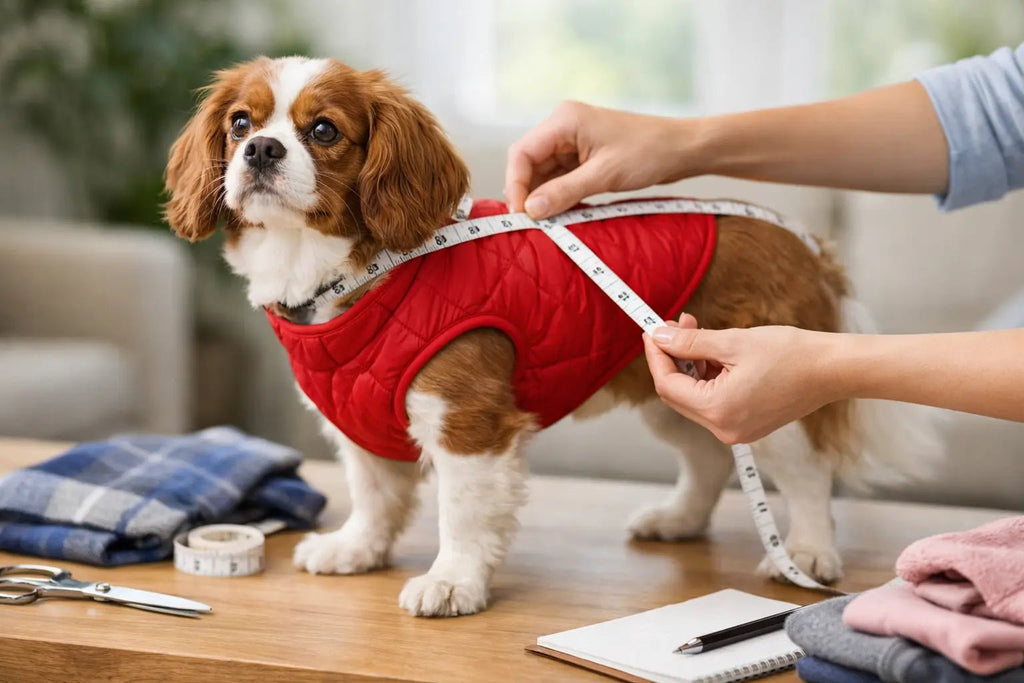
How to Measure Dog Clothes the Right Way
Nothing ruins a cute new dog sweater faster than a tight chest, a saggy back, or a neckline your pup keeps pawing at. If you have ever guessed a size and hoped for the best, learning how to measure dog clothes can save you time, money, and one very unimpressed dog.
A good fit is not just about looks. Dog clothing should feel comfortable, stay in place, and let your pet move, rest, and potty without a struggle. The right measurements help you choose clothes that keep your dog warm and happy without rubbing, slipping, or squeezing.
How to measure dog clothes at home
You do not need anything fancy to get started. A soft measuring tape is best, but a piece of string and a regular ruler can work too. It also helps to have a few treats nearby, especially if your dog thinks measuring time is a very strange game.
Try to measure your dog while they are standing naturally on all four legs. If they are sitting, curled up, or twisting for snacks, your numbers can come out off. Measure gently, and keep the tape snug but not tight. You want the tape to rest against the fur without pressing into it.
The three most common measurements for dog clothes are back length, chest girth, and neck girth. Some outfits may also ask for leg length or waist measurement, but those are usually extras for more tailored pieces like full-body pajamas or recovery suits.
Back length
Back length is usually the first place people start, and for many shirts, hoodies, and coats, it matters a lot. Measure from the base of the neck to the base of the tail. The base of the neck is where the collar naturally sits, not halfway up the neck near the ears.
Stop measuring where the tail begins. Do not measure all the way down the tail itself. If the clothing is too long in the back, it can bunch up or get in the way when your dog goes outside.
Chest girth
Chest girth is often the most important measurement of all. Wrap the tape around the widest part of your dog's chest, usually just behind the front legs. This area tells you how much room the clothing needs for easy breathing and movement.
If your dog has a broad chest, like a French Bulldog, Boxer, or Pit Bull mix, chest size can matter more than back length. In those cases, a piece of clothing that matches the back but is too narrow in the chest will never feel right.
Neck girth
Measure around the base of your dog's neck where a collar would normally sit. This tells you whether the neckline will be comfortable or restrictive. A neck opening that is too tight can make dressing stressful, especially for dogs who already dislike having clothes pulled over their head.
If a product has a high neck, turtleneck, or zip-up design, this measurement becomes even more important. For a simple loose tee, there is often a little more wiggle room.
Why sizing charts can still vary
One of the trickiest parts of learning how to measure dog clothes is realizing that measurements are only half the job. The other half is understanding that sizing is not universal. A medium in one brand may fit like a small in another.
That happens because dog apparel is made in different cuts, fabrics, and styles. Stretchy fleece gives you more flexibility than a structured raincoat. A pullover sweater may need extra room in the chest, while an adjustable vest may have more forgiveness.
This is why the product's size chart matters more than the size label alone. Always compare your dog's actual numbers to the chart for that specific item. If you shop with brands that focus on comfort and practical everyday pet wear, the fit process usually feels a lot less frustrating.
Should you size up or down?
Usually, if your dog falls between sizes, sizing up is the safer choice. A little extra room is often easier to manage than something too tight. Tight clothing can limit movement, cause chafing, and make some dogs refuse to walk altogether.
That said, it depends on the item. For a lightweight T-shirt or stretchy pajama set, a slightly larger size may still fit nicely. For a harness-style coat or a water-resistant jacket, too much extra room can cause shifting and rubbing.
Pay close attention to your dog's build, not just the chart. Long and lean dogs, barrel-chested dogs, and fluffy dogs all wear clothes differently. If your dog has thick fur, factor that in too. A coat has to fit over the dog you actually have, not the dog underneath all that fluff.
Common mistakes when measuring dog clothes
The biggest mistake is measuring while your dog is lying down or squirming. That usually shortens the back and changes the chest reading. Another common issue is pulling the tape too tightly because you want an exact number. With dog clothes, exact does not mean tight.
People also tend to rely too much on breed guesses. Two dogs from the same breed can have very different body shapes. A Dachshund mix may need extra back length. A stocky small dog may need a larger chest size than expected. Breed can give you a rough starting point, but measurements tell the real story.
Another easy miss is ignoring the clothing style. A sleeveless vest fits differently than a full-coverage winter coat. If the item covers more of the body, every measurement matters more.
How to check if the fit is right
Once the clothing is on, your dog should be able to walk, sit, lie down, and use the bathroom without trouble. The fabric should sit flat without digging into the neck or underarms. You should be able to slide two fingers comfortably between the clothing and your dog's body in most areas.
Watch your dog's behavior too. If they freeze, scratch constantly, chew at the outfit, or move stiffly, the fit may be off even if the measurements looked right on paper. Some dogs need a little time to adjust to wearing clothes, but discomfort usually shows up fast.
Look for rubbing around the armpits, neckline, and belly. Those spots tend to reveal problems first. If your dog is between haircuts or has a thick seasonal coat, fit can also change over time.
Measuring for different types of dog clothes
Not every item needs the same level of precision. For simple shirts and sweaters, back, chest, and neck are usually enough. For winter coats, chest measurement becomes especially important because layering and insulation reduce flexibility.
Raincoats need enough room to move without flapping or twisting. Pajamas and recovery wear often need a closer fit, but not so close that they restrict the legs or belly. Dresses, hoodies, and costume-style outfits can be more style-driven, which means checking the chart carefully matters even more.
If your dog is shopping for seasonal basics, it can help to keep their measurements written down in your phone. That way, when you find a good deal, you are not re-measuring from scratch every time. At Souths Pet Supplys, that kind of simple, everyday convenience matters because pet parenting is already busy enough.
A few fit tips for puppies, seniors, and special body types
Puppies grow quickly, so buying a tight exact fit rarely makes sense unless you only need it for a short window. A little room to grow is practical, especially for everyday wear. Just make sure it is not loose enough to trip them.
Senior dogs may need softer fabrics and easier closures. If your older dog has arthritis or gets stiff in cooler weather, clothing should be easy to put on and take off. A pullover that works for a young dog may be a hassle for an older one.
For dogs with deep chests, short legs, broad shoulders, or extra-long backs, fit gets more personal. In those cases, the best piece of dog clothing is not always the cutest one. It is the one your dog forgets they are wearing.
When you know how to measure dog clothes well, shopping gets easier and your dog gets the comfort they deserve. A few careful minutes with a measuring tape can mean fewer returns, a better fit, and one more small way to keep your best friend cozy, comfortable, and ready for whatever the day brings.
Related post
15
Jul
13
Jul
