
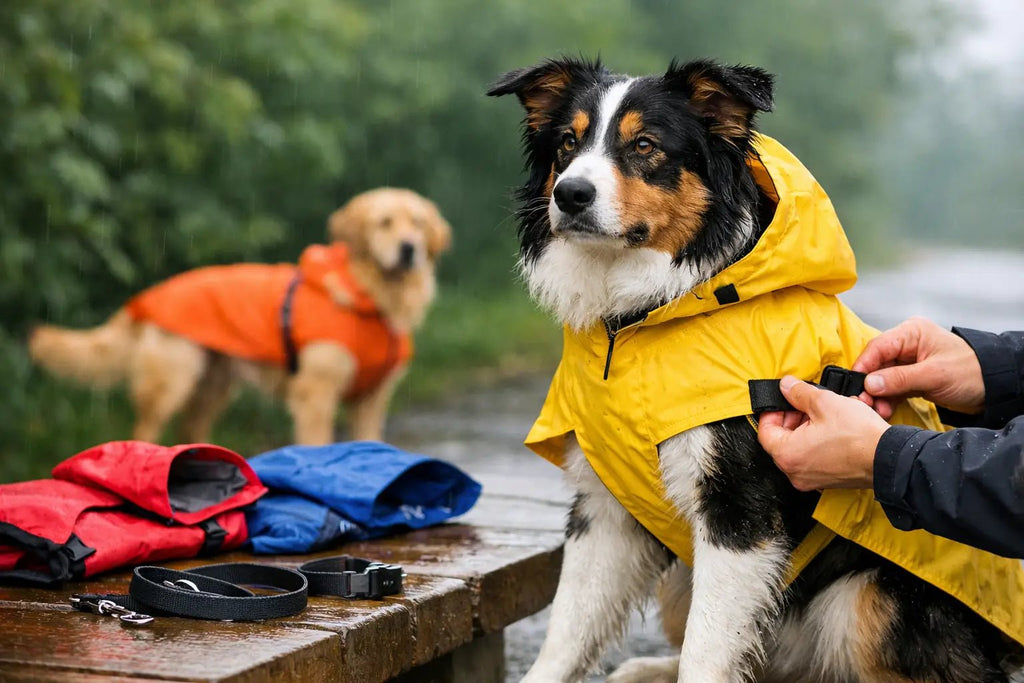
How to Choose a Dog Raincoat That Fits
A wet dog shake in the hallway is one thing. A dog that dreads rainy walks because their coat is heavy, cold, or rubbing in all the wrong places is another. If you are figuring out how to choose dog raincoat options that actually keep your pup comfortable, the best choice comes down to fit, coverage, fabric, and how your dog moves on a real walk.
Some dogs need a raincoat almost every wet day. Others only need one during cold rain, longer walks, or messy shoulder seasons. The right pick is not about buying the thickest or cutest jacket on the page. It is about finding a coat your dog will happily wear, one that keeps water off without trapping heat, shifting around, or getting in the way.
How to choose dog raincoat styles for your dog
Start with your dog, not the product photo. Breed, body shape, coat type, age, and activity level all matter. A lean short-haired dog may need more coverage and a little extra warmth, while a fluffy double-coated dog may only need a lightweight shell to stop them from getting soaked.
Body shape changes the fit more than many pet parents expect. Deep-chested breeds, broad-shouldered dogs, and long-backed dogs often need more careful measuring than a standard small, medium, or large guess. If your dog falls between sizes, the better choice depends on the design. A coat with adjustable belly straps gives you more flexibility than one with a fixed fit.
It also helps to think about your walks. If your dog mostly takes quick bathroom breaks, almost any decent waterproof layer may do the job. If you are out for neighborhood walks, park visits, or rainy hikes, details like leg freedom, leash access, and secure closures matter much more.
Measure before you shop
A good raincoat starts with three measurements: back length, chest girth, and neck. Back length is usually measured from the base of the neck to the base of the tail. Chest girth is the widest part of the ribcage. Neck measurement should sit where the coat naturally rests, not too high under the ears.
Do not guess based on weight alone. Two dogs can weigh the same and wear very different sizes because one is stocky and the other is slim. If a brand offers a size chart, use it every time. Pet clothing sizes are not universal.
When comparing measurements, prioritize the chest first, then the back. A slightly shorter coat is often better than one that fits the back but squeezes the chest. If the chest is too tight, your dog may resist wearing it, and the fabric can pull or rub during movement.
Fit matters more than you think
The best raincoat should feel secure without feeling restrictive. It should stay in place when your dog walks, trots, sniffs, and turns around. If it twists to one side or slides backward, the fit is off even if the size technically matches.
Look for room at the shoulders. Dogs move from the front, and a stiff or tight shoulder area can make even a calm pup walk awkwardly. The belly strap should sit snugly enough to hold the coat in place but not so tight that it presses into the ribs.
Coverage should protect the back and chest from rain without blocking natural movement. Some coats offer full belly panels, while others leave more of the underside open. Full belly coverage helps in heavy rain and on muddy walks, but it can be less practical for male dogs unless the design is cut high enough to avoid bathroom messes.
Choose the right fabric and weather protection
Not every raincoat is truly waterproof. Some are water-resistant, which is fine for light drizzle but less helpful in steady rain. If your dog will be out in real wet weather, look for a waterproof outer layer and check whether the seams and closures are designed to keep water out.
The inside matters too. A slick lining can help the coat slide on easily over fur, but the lining should not feel plasticky or sticky. Breathability is important, especially for active dogs. A coat that blocks rain but traps heat can leave your dog damp from the inside instead of the outside.
This is where trade-offs come in. A thicker raincoat may feel more protective, but it can be too warm for mild weather. A thin shell may be perfect for spring rain but not enough for a small dog in cold wind. If you live somewhere with changing weather, a lightweight waterproof coat is often the most flexible choice because you can layer underneath when needed.
Details that make rainy walks easier
Small features can make a big difference once the weather turns sloppy. A leash opening is one of the most useful. If your dog wears a harness, check that the coat works with it instead of bunching or blocking the attachment point.
Reflective trim is worth having if you walk early in the morning, after work, or during dark, stormy weather. Visibility matters for both safety and peace of mind. A hood can sound appealing, but many dogs dislike them, and some hoods shift around or block vision. For most dogs, a well-shaped collar or high neck offers better comfort than a floppy hood.
Fasteners matter more than they seem. Hook-and-loop closures are easy and adjustable, but they can collect fur over time. Buckles may feel more secure but can take longer to put on. Snaps are simple, though they offer less flexibility if your dog is between sizes. The best closure is the one you can use quickly while your dog is standing at the door ready to go.
Think about your dog's comfort level
Even a well-made raincoat is the wrong pick if your dog hates wearing it. Some dogs are relaxed about clothing right away. Others need softer materials, lighter coverage, and a little time to adjust.
If your dog is sensitive, avoid anything noisy or stiff. Crinkly fabric can bother nervous pups. Wide straps are often more comfortable than thin ones because they spread pressure more evenly. A coat that slips on easily also helps, especially for older dogs or dogs that do not like having their paws handled.
Watch how your dog behaves after you put it on. If they freeze, scratch, arch their back, or keep trying to bite at the coat, something is off. It might be too tight, too hot, too long, or simply unfamiliar. A good fit should let your dog move naturally within a few minutes.
How to choose dog raincoat options by dog type
Small dogs often benefit from extra coverage because they sit closer to wet ground and can get chilled faster. A raincoat with chest protection can help keep them cleaner and more comfortable.
Large dogs usually need a secure fit more than heavy insulation. If the coat shifts on a bigger body, it can become annoying fast. Adjustable straps and strong closures matter here.
Short-haired dogs and senior dogs may appreciate a raincoat with a light lining in cool weather. Thick-coated breeds usually do better in a breathable shell with no extra bulk. Highly active dogs need flexibility and ventilation, while couch-loving pups may be happy with a simple easy-on layer for quick outings.
Don’t forget cleaning and durability
A dog raincoat is going to deal with mud, puddles, and sidewalk grime. Easy cleaning is part of choosing well. If the coat cannot be wiped down or washed without special care, it may become more hassle than help.
Check the stitching, strap attachments, and edge binding. These areas often wear out first. A budget-friendly raincoat can still be a smart buy if it is well-made and suited to your climate. Affordable does not have to mean flimsy, and everyday pet parents should not have to overspend to keep a dog dry and happy.
That balance of comfort, quality, and value is what matters most. At Souths Pet Supplys, that is the kind of practical pet care we believe in - making everyday routines easier without making your budget work overtime.
The best choice is the one your dog will wear
It is easy to get pulled toward style, but the best raincoat is the one your dog forgets they are wearing. If it fits well, keeps them dry, and makes rainy walks less stressful, you picked the right one.
Take a few minutes to measure carefully, think about your weather, and be honest about your dog’s preferences. A simple, comfortable raincoat can turn a miserable soggy outing into a much easier part of the day, and your dog will feel the difference every step of the way.
Related post


15
Jul
13
Jul
