

Do Cats Need Collars? What to Know
That tiny collar can spark a surprisingly big question: do cats need collars, or are they better off without one? The honest answer is that it depends on your cat, your home, and how you want to handle identification and safety. For many cats, a properly fitted breakaway collar is a simple, affordable way to add peace of mind. For others, especially cats that panic in gear or have special health concerns, skipping the collar may make more sense.
Do cats need collars for safety?
In many homes, collars are less about fashion and more about backup protection. If your cat slips out a door, pushes through a screen, or gets curious during a move, a collar gives people an immediate sign that this is a loved pet, not a stray. That can make a big difference before anyone gets close enough to scan for a microchip.
A collar with an ID tag can help a neighbor contact you fast. That matters because not every person who finds a cat will think to visit a vet or shelter for a microchip scan. Sometimes the simplest solution is the one that gets a cat home the quickest.
That said, collars are not risk-free. Traditional collars can snag on furniture, fences, or branches. That is why cat collars should almost always be breakaway styles designed to release under pressure. If a collar does not have a quick-release safety feature, it is usually not the right choice for a cat.
When a collar makes the most sense
Outdoor cats and indoor-outdoor cats usually benefit the most from wearing a collar. They face more chances of getting lost, being mistaken for a stray, or wandering farther than expected. In those cases, visible ID is very helpful.
Indoor cats can benefit too, even if they rarely go outside. Doors get left open. Guests come and go. Movers, cleaners, kids, and deliveries create the kind of small household chaos that leads to escapes. Many indoor cat owners assume it will never happen until it does.
Collars can also help in multi-pet homes. A tag can quickly tell others that your cat has a medical need, needs to stay indoors, or belongs to a specific apartment or house. For some families, that extra layer of communication is worth it.
When a collar may not be the right choice
Some cats truly hate wearing anything around their neck. They scratch at the collar nonstop, freeze in place, roll dramatically across the floor, or become stressed and withdrawn. A little adjustment period is normal, but ongoing distress is not something to ignore.
Kittens, senior cats, and cats with certain medical conditions may also need extra care. Very young kittens can outgrow collars quickly, and frail or medically sensitive cats may do better without one unless a veterinarian recommends otherwise. Long-haired cats sometimes need more frequent checks to make sure fur is not matting under the collar.
If your cat cannot tolerate a collar safely, a microchip becomes even more important. A microchip is not visible like a tag, but it provides permanent identification that cannot fall off.
Collar versus microchip: which matters more?
The best answer is both. A microchip gives long-term identification, and a collar gives immediate identification. One does not fully replace the other.
A microchip helps if a shelter or clinic scans your cat. A collar helps when a neighbor finds your cat in the yard and wants to call right away. If you have to choose just one, many vets would say a microchip is essential because it is permanent. But if your cat can wear a collar comfortably, adding one creates a stronger safety net.
This is especially true for cats that look like common neighborhood cats. Without a collar, a friendly escaped pet may be assumed to be an outdoor cat who belongs nearby, and people may not realize the cat is lost.
What kind of collar should a cat wear?
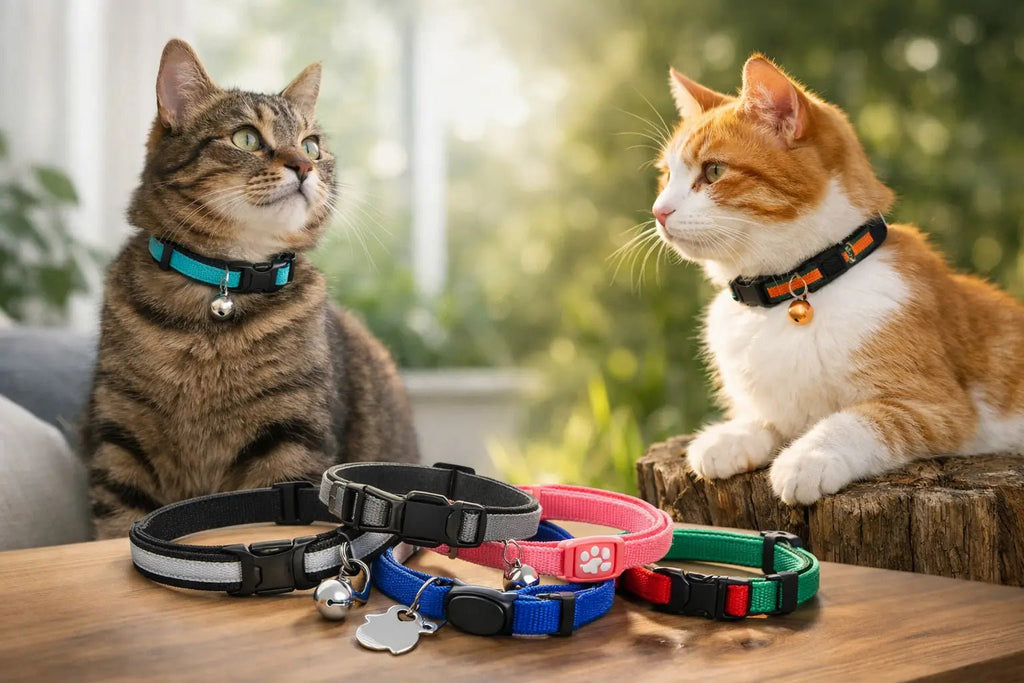
If you decide your cat should wear a collar, the safest choice is usually a lightweight breakaway collar made specifically for cats. Dog collars are often too heavy and may not release correctly under pressure.
Look for a collar that feels light, soft, and adjustable. It should sit comfortably without rubbing. If you want a tag, keep it small so it does not feel bulky or make too much noise. Some cats do fine with bells, but others find them irritating. If your cat seems bothered by the constant sound, it is okay to skip the bell.
Comfort matters just as much as safety. A stiff, scratchy collar is more likely to annoy your cat and less likely to stay on. Soft materials and a simple design usually work best for everyday wear.
How to fit a cat collar properly
A poor fit causes most collar problems. Too tight, and it can rub the skin or mat the fur. Too loose, and a paw or jaw may get caught, or the collar may slip off too easily.
A good rule is the two-finger test. You should be able to fit two fingers between the collar and your cat's neck. Check the fit regularly, especially for kittens or cats whose weight changes. What fit well a month ago may not fit well now.
It also helps to inspect the collar often for wear. Fraying, stretched elastic, cracked buckles, or damaged tag rings are signs it is time for a replacement. Everyday essentials work best when they are still in good condition.
How to help your cat get used to a collar
Most cats need a little time to adjust. Start with short sessions indoors and choose a quiet time when your cat feels relaxed. Offer treats, praise, or play so the collar becomes part of a positive routine.
At first, your cat may scratch at it or walk funny. That is common. What you want to see is gradual improvement over a few days. If your cat stays highly agitated, keeps getting a limb caught, or seems fearful, take the collar off and reassess the fit and style.
Sometimes the problem is not the idea of a collar. It is the wrong collar. A softer, lighter option often makes a big difference. For pet parents looking for comfort without overspending, that balance of safety, fit, and value is exactly what matters most.
Common concerns pet parents have
One common worry is whether collars are cruel for indoor cats. In most cases, no, not if the collar is safe, fitted properly, and the cat tolerates it well. Another concern is whether collars always fall off. Breakaway collars are designed to release in emergencies, so yes, they may come off sometimes. That can be frustrating, but it is also what makes them safer.
Some owners also wonder if a bell is necessary. Usually, it is optional. Bells can help alert birds and small wildlife outdoors, but they are not required for identification. If your cat seems irritated by a bell, removing it may improve comfort.
And then there is the style question. Cute matters, but comfort matters more. A great collar can still look nice without being heavy, sparkly, or overloaded with extras. Simple is often the better choice.
So, do cats need collars?
For many cats, yes, a collar is a smart everyday safety tool, especially when paired with a microchip. It can help your cat get home faster, show that they are cared for, and give you one more layer of reassurance. But it is not automatic for every cat. The right answer depends on your cat's behavior, lifestyle, and comfort.
If you choose a collar, keep it lightweight, breakaway, and properly fitted. If your cat cannot tolerate one, focus on microchipping and keeping your contact details current. Good pet care is rarely about doing what everyone else does. It is about choosing what keeps your own cat safe, comfortable, and happy.
A collar should make life easier, not more stressful. When it fits well and suits your cat, it becomes one of those small everyday essentials that quietly does a very important job.
Related post


15
Jul
13
Jul
