
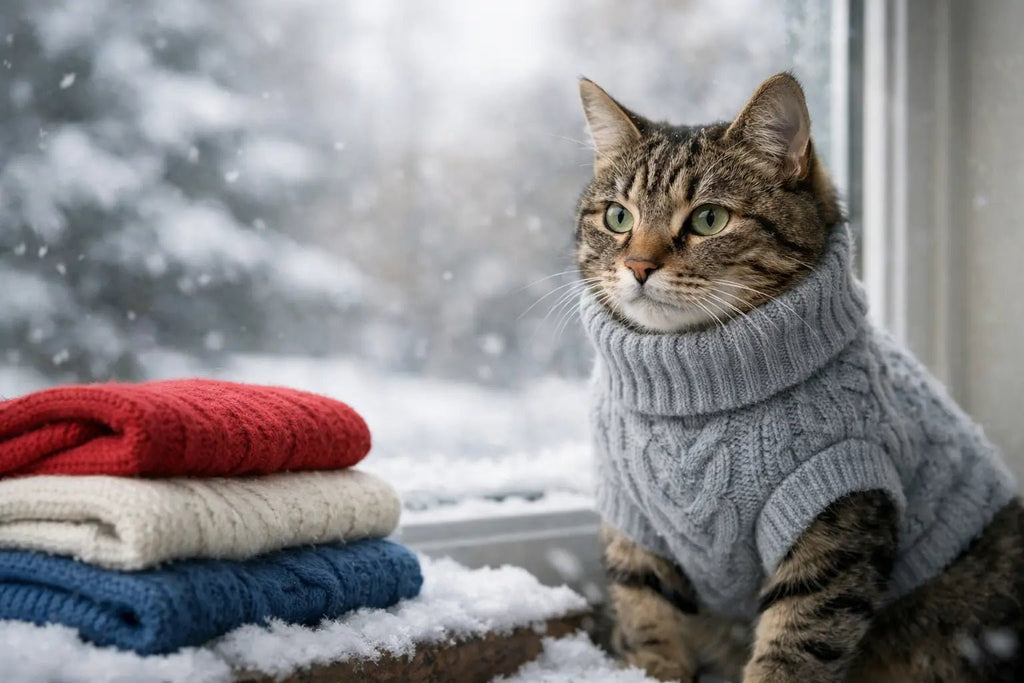
Cat Sweaters for Cold Weather: Do Cats Need One?
The heat kicks on, the windows feel drafty, and your cat suddenly stops lounging on the tile and starts curling up on blankets instead. That shift makes a lot of pet parents wonder about cat sweaters for cold weather - and whether a sweater is actually helpful or just cute.
The honest answer is that some cats truly benefit from extra warmth, while others would rather file a formal complaint the second a sleeve touches their leg. A sweater can be a comfort item, but only when it fits well, suits your cat’s body and personality, and is used for the right reason.
When cat sweaters for cold weather make sense
Not every cat needs winter clothing. Many healthy adult cats with thick coats do just fine indoors, even when temperatures drop a bit. Their fur, body fat, and favorite talent for finding the warmest spot in the house usually handle the job.
But some cats are more likely to feel the cold. Short-haired breeds, senior cats, kittens, very lean cats, and cats with certain health issues may have a harder time staying comfortable. Hairless cats are the most obvious example, but they are far from the only ones who may appreciate an extra layer.
A sweater can also help if your home runs chilly, if your cat likes spending time in colder rooms, or if your pet is recovering from grooming or a medical issue that leaves them with less natural insulation. In those cases, warmth is not about fashion. It is about comfort.
That said, a sweater should never replace solving the bigger problem. If a room is consistently too cold, your cat also needs warm bedding, draft protection, and a cozy place to rest away from cold floors.
Signs your cat may be feeling too cold
Cats are subtle, but they do leave clues. If your cat is sleeping in tighter balls than usual, seeking out heaters, hiding under blankets, or avoiding certain parts of the house, cold may be part of the reason. Some cats become less active when they feel chilled, especially older pets.
Cold ears and paws can happen, but they are not the only thing to watch. Shivering, hunching, or seeming restless in cooler spaces can also point to discomfort. If those signs are frequent or sudden, it is smart to think beyond clothing too. Ongoing sensitivity to cold can sometimes be tied to age, low body weight, or health concerns.
A sweater can help with mild everyday chill. If your cat seems unusually cold all the time, it is worth checking in with your veterinarian instead of relying on extra layers alone.
When a sweater is the wrong choice
Some cats hate wearing clothes, and that matters. If your cat freezes in place, flops dramatically, runs backward, or becomes clearly stressed, the sweater is not doing its job. Warmth should make your cat more comfortable, not less.
There are also practical safety limits. A sweater is a bad idea if it is tight around the neck, legs, or chest, if it restricts movement, or if it has loose decorations your cat could chew off. Anything with buttons, strings, zippers, or rough seams can create problems fast.
Overheating is another issue people forget about. Indoor cats can move from a cool room to a sunny window or warm lap in seconds. If the sweater is too heavy, your cat may get uncomfortable just as quickly as they got cold.
How to choose cat sweaters for cold weather
The best sweater is the one your cat barely notices. That usually means soft fabric, a simple design, and a fit that is snug without being restrictive. Stretchy knits or lightweight fleece blends tend to work better than stiff materials.
Focus on comfort before style. A high neck may look adorable, but if it rubs your cat’s throat or makes grooming harder, it will not last long. A good sweater leaves room at the neck, allows normal walking, and does not bunch under the front legs.
It also needs to be easy to take on and off. If getting dressed turns into a wrestling match, nobody wins. Simple pull-on designs can work for calm cats, while others do better with closures that make changes quicker and gentler.
If you are shopping on a budget, this is one of those purchases where practical value matters more than fancy details. A well-made basic sweater that is soft, washable, and safe is a better choice than a trendy one that looks cute for five minutes and causes irritation for the rest of the day.
Fit matters more than size labels
Sizing can vary a lot from one product to another. Instead of trusting labels alone, measure your cat’s chest, neck, and back length. The chest is usually the most important number because that area affects comfort and movement the most.
You should be able to fit a couple of fingers between the sweater and your cat’s body. If the fabric pulls when they sit, stretches tightly across the shoulders, or leaves marks in the fur, it is too small. If it twists, sags, or lets a paw slip through the wrong opening, it is too big.
Fabric choices that work better
Soft, breathable fabrics are usually safest for indoor wear. Look for materials that provide warmth without trapping too much heat. Smooth interiors help prevent rubbing, especially for short-haired or hairless cats.
Scratchy wool, heavy knits, and anything that sheds easily can be irritating. If your cat has sensitive skin, simpler is better. Washability matters too, because sweaters pick up fur, litter dust, and the occasional mystery smell.
Getting your cat used to a sweater
The fastest way to make your cat hate clothing is to force it. A better approach is slow and calm. Let your cat sniff the sweater first. Set it near a favorite bed or blanket so it becomes familiar before it becomes wearable.
When you do try it on, keep the session very short. A minute or two is enough for the first attempt. Offer praise, treats, or play so your cat builds a positive connection with the experience.
Watch how they move. Some hesitation is normal the first time, but your cat should be able to walk, lie down, and turn comfortably. If they seem agitated or cannot move naturally, take it off and reassess the fit or decide clothing is simply not for them.
A lot of cats do better wearing sweaters only at certain times of day, such as cool mornings or evenings, instead of all day. It depends on your home, your cat’s coat, and how much they tolerate the extra layer.
Sweaters are only one piece of staying warm
Even the best sweater works better as part of a full comfort setup. Warm cat beds, plush blankets, heated pads made for pets, and draft-free sleeping areas often make a bigger difference than clothing alone. If your cat has options, they can regulate their comfort more naturally.
This is especially true for cats who dislike wearing anything. You can still keep them cozy with raised beds, soft nesting spots, and warmer places to rest away from doors, tile, and windows. Sometimes the smartest winter upgrade is not a wardrobe change. It is a better nap station.
For budget-minded pet parents, that is good news. You do not have to overspend to keep your cat comfortable. A thoughtfully chosen sweater, a warm blanket, and a snug bed can go a long way when temperatures dip.
A few common mistakes to avoid
One of the biggest mistakes is leaving a sweater on without checking your cat regularly. Cats can get tangled, overheated, or irritated in ways that are easy to miss if you are not paying attention.
Another is using a sweater for outdoor winter exposure. Most cats should not rely on clothing to handle cold weather outside, especially in freezing, wet, or windy conditions. A sweater is for added comfort, not serious weather protection.
It is also easy to overestimate how much warmth your cat needs. If your home is comfortably heated and your cat has a healthy coat, they may prefer a fuzzy bed over a wearable layer. Not every winter care choice has to be worn.
So, should you buy one?
If your cat gets chilly, tolerates clothing well, and spends time in a cool indoor space, a sweater can be a simple way to add comfort. If your cat hates clothes, runs warm, or already has plenty of cozy spots to rest, skip the sweater and focus on bedding instead.
At Souths Pet Supplys, that is how we think about cold-weather comfort in general: keep it simple, safe, and centered on what helps your pet feel good every day. The best choice is the one your cat actually enjoys.
A sweater should never be about dressing your cat up for your camera roll alone. If it brings real warmth, easy movement, and a calmer, cozier winter day, then it is doing exactly what it should.
Related post
15
Jul
13
Jul
