
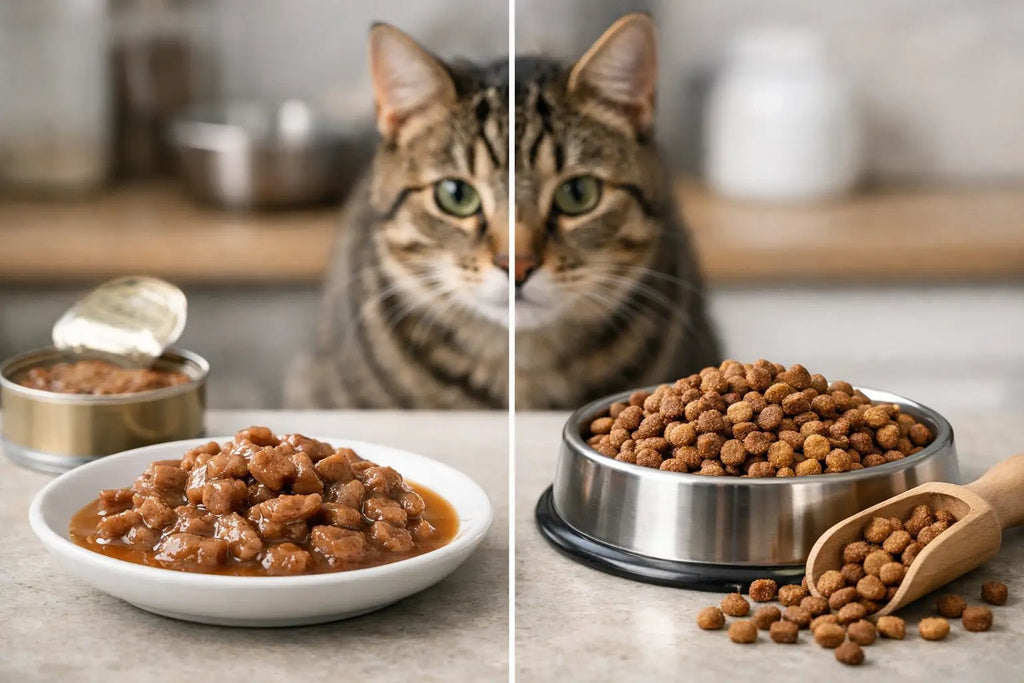
Wet Cat Food vs Dry: Which Is Better?
That half-full bowl your cat keeps walking away from is telling you something. When pet parents compare wet cat food vs dry, the real question usually is not which one is better on paper. It is which one helps your specific cat eat well, stay comfortable, and fit into your daily routine without turning mealtime into a battle.
Some cats thrive on kibble. Others do better with canned food, especially if hydration, appetite, or age is a concern. And plenty of healthy cats do best with a mix of both. The smartest choice comes down to your cat's health, preferences, and your budget.
Wet cat food vs dry: what actually changes?
The biggest difference is moisture. Wet cat food contains much more water than dry food, which can help support hydration. Since many cats naturally do not drink a lot of water, this matters more than many people realize. A cat eating wet food often gets a good share of daily fluid intake right from the bowl.
Dry food, on the other hand, is concentrated and shelf-stable. It is easy to measure, store, and serve. For busy households, that convenience is a real advantage. It also tends to cost less per feeding, which matters when you are shopping for quality while keeping everyday pet care affordable.
Texture, smell, and calorie density also differ. Wet food has a stronger aroma and softer texture, which can be helpful for picky eaters or senior cats. Dry food is more calorie-dense, so smaller portions often go further.
Why wet food works well for many cats
Wet food is often a strong choice for cats that need extra hydration. This can be especially helpful for cats prone to urinary concerns, older cats, or cats that simply ignore their water bowl unless you practically send them a formal invitation.
Its softer texture is another plus. Cats with dental sensitivity, missing teeth, or age-related chewing trouble may find wet food much easier to eat. If your cat has ever hovered over kibble, seemed interested, then backed away, texture could be part of the issue.
Wet food can also be more appealing to picky eaters. The smell is stronger, and for many cats, smell is half the meal. If your cat is recovering from illness, dealing with stress, or just acting suspiciously dramatic about dinner, wet food may tempt them to eat when dry food does not.
There is a weight-management angle too. Because wet food contains more water, it usually has fewer calories per ounce than dry food. That can help some cats feel satisfied while eating a larger-looking portion. Of course, portion control still matters. A cat can overeat wet food just as easily if servings are too generous.
Where dry food has the advantage
Dry food wins on convenience. It is simple to scoop, easy to store, and usually less messy. If your mornings are rushed, kibble can make feeding faster without sacrificing consistency. It also stays out longer than wet food, which helps if your cat likes to graze throughout the day.
Cost is another big reason many pet parents choose dry food. In general, it is more budget-friendly than wet food, especially for multi-cat homes. That does not mean it is automatically the better value, but it often makes daily feeding more manageable for families trying to balance quality and affordability.
Dry food may also support some dental benefits, though this gets overstated. Kibble is not a substitute for dental care, and not all dry food cleans teeth in a meaningful way. Still, some formulas and textures may create a mild scraping effect. Just do not count on dry food alone to keep your cat's teeth healthy.
One more practical benefit is portion tracking. Measured scoops of dry food are easy to use, which can help with routine feeding. That matters for cats who gain weight easily or for households where more than one person feeds the cat and everyone swears they only gave "a little."
Wet cat food vs dry for kittens, adults, and seniors
Age changes the conversation.
Kittens need nutrient-dense food that supports growth, energy, and healthy development. Both wet and dry kitten formulas can work, as long as they are complete and balanced for kittens. Wet food may be easier for very young kittens transitioning to solids, while dry food can be useful once chewing is no problem.
Healthy adult cats often do well on either option. For this stage, the right choice usually comes down to hydration, body condition, activity level, and preference. If your adult cat drinks plenty of water and maintains a healthy weight, dry food may be perfectly fine. If they are picky, low-thirst, or prone to urinary issues, wet food may make more sense.
Senior cats often benefit from the softness and hydration of wet food. Aging cats can become less interested in drinking water, and some develop dental discomfort that makes crunchy food harder to manage. That said, many older cats still enjoy and tolerate dry food well. It depends on the individual cat and any health concerns your vet has identified.
Health needs can tip the balance
If your cat has urinary tract concerns, kidney issues, diabetes, or trouble maintaining appetite, wet food is often recommended more often than dry. The moisture content alone can be a meaningful advantage. For cats that need carefully managed calories or prescription diets, your vet may suggest one texture over the other based on the condition being treated.
Cats with dental disease are a little more complicated. Some need softer food because chewing hurts. Others may be prescribed a dental-specific dry formula. This is one of those situations where blanket advice does not help much. The best answer depends on what is actually going on in your cat's mouth.
Food sensitivities can also matter more than texture. Some cats react to certain proteins, fillers, or formulas whether the food is wet or dry. If your cat has digestive trouble, itching, or chronic vomiting, focus on ingredient quality and veterinary guidance instead of assuming wet or dry is the main issue.
Is mixed feeding the best of both worlds?
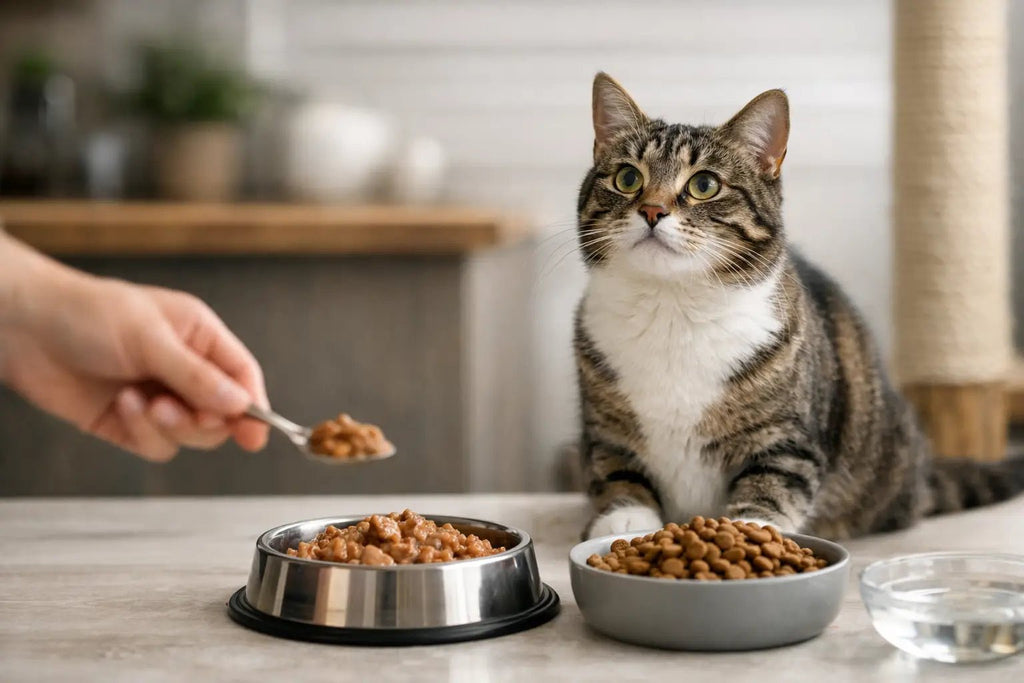
For many households, yes. Feeding both wet and dry can combine the hydration benefits of wet food with the convenience and value of dry food. It can also keep meals interesting for cats that get bored easily.
A common approach is dry food during the day and wet food once or twice daily. That setup works well for pet parents who want structure without making feeding complicated. It can also help stretch the budget while still giving your cat extra moisture and variety.
The key is calorie awareness. Mixing food types is easy. Overfeeding while mixing them is even easier. If you offer both, make sure the total daily amount still fits your cat's needs.
What to look for on the label
Whether you choose wet, dry, or both, the label matters more than the format alone. Look for food that is complete and balanced for your cat's life stage. That means kitten, adult, or all life stages if appropriate.
You also want a named animal protein source and a formula from a brand that takes safety and quality seriously. Fancy packaging does not always mean better nutrition. Your cat will not care how elegant the bag looks if the food inside does not agree with them.
If you are switching foods, do it gradually over about a week. Sudden changes can upset your cat's stomach, even if the new food is a good option long term. A slow transition gives your cat time to adjust and makes it easier to spot any problems.
So which should you choose?
If your cat needs more hydration, has a sensitive appetite, or is getting older, wet food often has the edge. If your priority is convenience, cost, and easy daily feeding, dry food may fit your home better. And if you want a practical middle ground, mixed feeding can be a very comfortable solution.
The best feeding plan is the one your cat does well on and you can manage consistently. A happy, well-fed cat does not need a perfect feeding trend. They need food that supports their health, suits their preferences, and fits real life. At Souths Pet Supplys, we believe good pet care should feel simple, comforting, and affordable - because everyday wellness matters most when it is easy to keep up with.
If your cat is eating well, staying hydrated, and meeting their health needs, you are already doing something right. Start there, pay attention to what your cat is telling you, and let mealtime get a little easier from here.
Related post



15
Jul

13
Jul
