
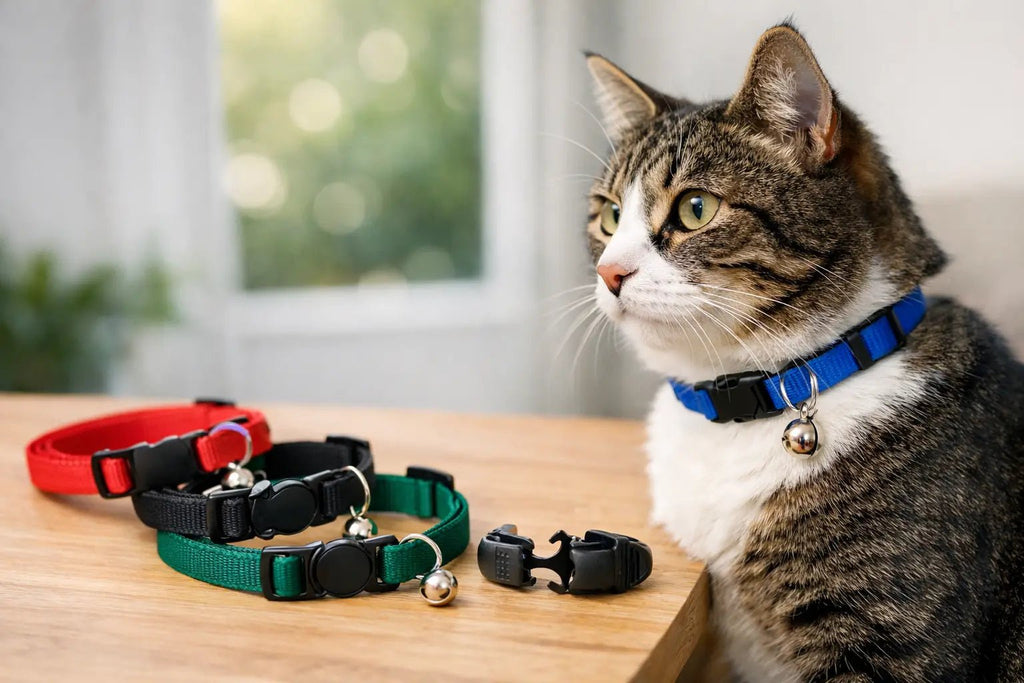
Breakaway Cat Collar Review: What Matters Most
A collar can look like a tiny accessory, but for a curious cat, it is a daily safety decision. This breakaway cat collar review focuses on what truly makes a collar worth wearing: a release clasp that works when it should, a fit that stays comfortable, and materials that hold up to real life without costing more than they need to.
For many pet parents, the goal is simple. You want your cat to come home safely, wear identification when needed, and still be free to slip out of the collar if it catches on a branch, crate edge, fence, or furniture. The right breakaway collar supports that peace of mind without turning every meal, nap, and zoomie session into a nuisance.
What Is a Breakaway Cat Collar?
A breakaway collar has a safety clasp designed to separate under pressure. Unlike a traditional buckle collar, which stays fastened until a person releases it, the breakaway closure opens when the collar is pulled or snagged with enough force.
That feature matters because cats climb, squeeze into narrow places, and explore with impressive determination. A collar that gets hooked can become dangerous if it cannot release. The breakaway design is intended to reduce the risk of a cat being trapped or injured.
There is a trade-off, of course. Because the collar can release, it can also come off during energetic play or outdoor adventures. That is not always a product flaw. Often, it means the safety feature did its job. For cats that spend time outside, a microchip and up-to-date registration provide backup identification if a collar is lost.
Breakaway Cat Collar Review: The Safety Test Comes First
The clasp is the most important part of any breakaway collar. It should open with a firm tug, but not pop apart simply because your cat is grooming, stretching, or shaking their head. Finding that middle ground is what separates a practical everyday collar from one that creates frustration.
A good clasp usually feels secure when you click it closed. The two sides should line up neatly, without a loose or wobbly connection. At the same time, you should be able to pull the collar apart with steady hand pressure. Never test it on your cat by tugging the collar while they are wearing it.
No breakaway collar can promise the exact same release point in every situation. Fur thickness, collar fit, the angle of a snag, and the force involved all affect how a clasp performs. Still, the basic question is straightforward: does the closure seem designed to release before a caught collar becomes a restraint? If the answer is no, choose another option.
For indoor-only cats, a breakaway collar is still a smart choice. Household hazards are more common than many people realize. A collar can catch on a chair, a heating vent, a toy basket, or the edge of a scratching post. Indoor cats are also masters of finding places they were never meant to reach.
Fit Is What Makes Safety Work
Even the best breakaway clasp cannot make up for a poor fit. A collar that is too loose may slide over your cat's head, snag more easily, or hang awkwardly under the chin. One that is too tight can rub the skin, mat fur, and make swallowing or breathing uncomfortable.
The usual starting point is the two-finger check. You should be able to gently slide two fingers between the collar and your cat's neck. This is a guide, not a rule carved in stone. A fluffy long-haired cat may need a little more attention because thick fur can hide a collar that has gradually become too snug.
Check the fit regularly, especially for kittens and young cats. They grow quickly, and a collar that fit comfortably last month may no longer be safe. Adult cats can also gain or lose weight, while seasonal coats can change how a collar sits around the neck.
Watch your cat's behavior during the first few days. Brief scratching or curiosity can be normal when a cat is new to collars. Constant pawing, hiding, rolling, or trying to bite the collar off may mean the fit, fabric, tag, or bell is bothering them. Comfort is not a luxury feature. It is what helps a cat tolerate the collar safely.
Material and Width Matter More Than Fancy Details
Nylon is a common choice because it is lightweight, affordable, and available in plenty of colors and patterns. It works well for many cats, provided the weave feels smooth and the edges are finished neatly. Rough edges can irritate the neck over time, especially on short-haired cats.
Soft fabric collars can feel gentler and may be a nice choice for sensitive cats. They can also show dirt or absorb moisture more easily, so they may need more frequent washing or replacement. Reflective material is useful for cats that venture outside around dusk, though it should be viewed as an extra visibility feature, not a substitute for supervision or identification.
Width deserves attention too. A very narrow collar can look delicate, but it may twist or dig into the fur if the hardware is bulky. A collar that is too wide can feel stiff on a small cat. Most cats do best with a lightweight, proportionate collar that rests flat against the neck.
Decorative extras should stay modest. Rhinestones, oversized bows, heavy charms, and thick metal pieces can look cute in a photo, but they may add weight or create something for your cat to chew. When comfort and safety are the priority, simpler is often better.
Bells, Tags, and Bow Ties: Helpful or Bothersome?
A bell is a personal choice. Some pet parents like the small sound because it helps them locate a quiet cat around the house. For outdoor cats, it may offer some warning to birds and small animals, although it is not a guaranteed wildlife protection tool.
Other cats dislike bells, and some owners prefer a quieter collar. If your cat flinches at the sound, repeatedly scratches at the collar, or seems stressed, choose a collar with a removable bell or skip it altogether.
An ID tag is helpful if your cat slips outside, but it should be light and secure. Large tags can clang against food bowls and make sleeping uncomfortable. A tag with your phone number, or a collar with identification printed directly on it, can keep essential details close without adding much bulk.
Keep in mind that breakaway collars are made to come off. A tag is useful, but a microchip remains the more reliable form of permanent identification. The best setup for many cats is both: a comfortable collar for visible information and a registered microchip for lasting backup.
When a Breakaway Collar May Not Be the Right Choice
For ordinary daily wear, breakaway collars are generally the safer collar style for cats. But they are not made for every activity. Never attach a leash to a standard breakaway collar. A leash pull can release the clasp unexpectedly, putting your cat at risk of getting loose.
If you are training a cat to walk outdoors, use a properly fitted cat harness with a leash attachment point. Harnesses distribute pressure across the body rather than concentrating it on the neck. They also offer better control for a startled cat.
Some cats simply cannot tolerate collars. If your cat develops irritation, loses fur around the neck, or shows persistent distress, talk with your veterinarian. It may be a material sensitivity, a fit issue, or a sign that your cat is more comfortable without a collar at home.
How to Choose a Good Value Collar
The most expensive collar is not automatically the safest, and the cheapest option is not automatically a poor choice. Look for sturdy stitching, a smooth adjustable slider, lightweight hardware, and a clasp that closes cleanly and releases under purposeful pressure. Those everyday basics matter more than a trendy print.
It also helps to keep a spare collar on hand. Collars get lost, wet, chewed, and mysteriously relocated beneath the sofa. Having a clean replacement means you do not have to rush into a choice when your cat's usual collar disappears.
At Souths Pet Supplys, the best everyday pet essentials are the ones that make caring for your companion feel easier. Choose a breakaway collar that fits your cat's lifestyle, check it often, and replace it when the clasp, fabric, or adjustment hardware starts to show wear. Your cat may never thank you for the safety feature, but their comfortable, carefree exploring is a pretty good sign that you chose well.
Related post

15
Jul
13
Jul
