
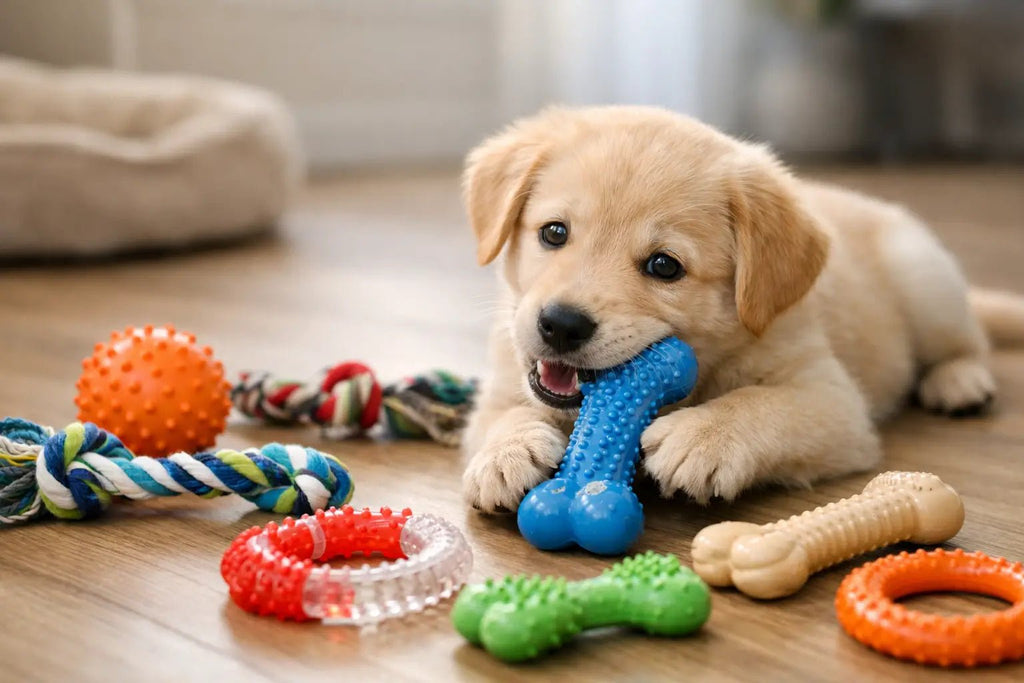
10 Best Puppy Toys for Teething
Your puppy was sweetly snoozing an hour ago. Now they are chewing the table leg, your sneaker lace, and somehow the corner of a blanket too. That is exactly why finding the best puppy toys for teething matters so much. The right toy can calm sore gums, redirect all that chewing energy, and make life a lot easier for both you and your pup.
Teething usually starts around 3 to 4 months and can continue until about 6 to 7 months, sometimes a little longer depending on the dog. During that stage, puppies are not being naughty for fun. Their mouths are uncomfortable, they are curious, and chewing helps relieve pressure as baby teeth fall out and adult teeth come in. A good toy gives them a safe, satisfying way to deal with all of that.
What makes the best puppy toys for teething?
Not every dog toy belongs in a teething puppy's mouth. Some are too hard and can be rough on developing teeth. Others are too flimsy and can break apart fast. The best puppy toys for teething usually hit a middle ground. They are soft enough to offer relief, but durable enough to stand up to repeated chewing.
Material matters first. Flexible rubber is a favorite for many pet parents because it has a little give, which feels better on sore gums than hard plastic or dense nylon. Soft rope toys can also work well for gentle chewers, especially if used during supervised play. Plush toys can comfort some puppies, but they are not always the best choice if your dog likes to rip and swallow stuffing.
Texture matters too. Puppies often enjoy surfaces with ridges, nubs, or grooves because they massage the gums while they chew. Some toys can also hold a small treat or a bit of dog-safe spread, which adds another layer of distraction when your puppy needs help settling down.
Size is easy to overlook, but it is a safety issue. A toy should be large enough that your puppy cannot swallow it, yet light enough for them to carry and chew comfortably. If you are between sizes, go with the safer option and watch how your puppy handles it.
10 types of teething toys worth considering
A lot of pet parents want one perfect toy, but most puppies do better with a small rotation. Different moments call for different textures and levels of engagement.
1. Soft rubber chew toys
These are often the most dependable choice for teething. They are gentle on sore mouths, easy to grip, and durable enough for daily use. If your puppy is chewing furniture, a soft rubber toy is often the first thing to try.
2. Freezable teething toys
Cold can be very soothing on inflamed gums. Some puppy toys are designed to be chilled in the fridge or freezer. Just make sure the toy is made for that purpose and does not become rock hard when cold.
3. Treat-dispensing chew toys
These are helpful when your puppy needs both comfort and focus. A toy with a hollow center can keep them busy longer, especially during crate time or while you are trying to get through a meeting without hearing your coffee table being gnawed on.
4. Rope toys for supervised chewing
A soft rope can give puppies something satisfying to mouth and tug. The trade-off is that rope strands can fray over time, so these toys need regular inspection. They are best for supervised play, not all-day access.
5. Textured rings and chew sticks
Puppies often love shapes they can hold with their front paws. Rings and short chew sticks are especially good for that. Look for flexible textures rather than extra-hard versions.
6. Comfort toys with chew-friendly parts
Some puppies like a toy that is part cuddle buddy, part chew object. A plush toy with reinforced seams and a rubber section can work well for dogs who want comfort as much as gum relief.
7. Puppy-safe dental chews
These are not exactly toys, but they can be useful during teething. They give puppies a legal chewing outlet and may help reduce some of the chewing aimed at household items. Always choose a chew designed specifically for puppies.
8. Lightweight rubber balls with texture
Not every teething toy has to sit still. Some puppies calm down when they can chase, carry, and chew in one session. A soft, textured ball can do all three.
9. Squeaky toys with durable exteriors
For some puppies, noise keeps their attention longer. A squeaky toy can be helpful if your pup loses interest in standard chew toys quickly. The caution here is durability. If the squeaker becomes exposed, the toy should be retired.
10. Starter variety packs
If you are still learning what your puppy likes, a small mixed set can save time and money. Some dogs love cold rubber. Others prefer fabric, rope, or treat toys. A variety pack helps you figure that out without overbuying one style.
How to choose the right toy for your puppy
Your puppy's breed, size, chewing style, and age all play a role. A tiny breed puppy with a delicate mouth may do best with very soft, lightweight options. A larger breed puppy may need something with more structure, even during early teething. What works for a gentle chewer may last five minutes with a determined one.
It also helps to pay attention to when the chewing happens. If your puppy gets mouthy in the evening, a soothing toy you can chill may be the best fit. If they get destructive when bored, a treat toy or a toy with more mental engagement may work better.
Try not to assume the most expensive toy is automatically the best one. Plenty of affordable puppy toys do a great job if the materials are safe and the design matches your dog's needs. For everyday pet parents, that balance of comfort, function, and value matters.
Toys to avoid during teething
Some products can look tough and long-lasting but are not ideal for puppies with developing teeth. Very hard chew toys can be too much for tender gums. If a toy feels harder than you would want pressed against your own sore gums, it is probably not the best pick for this stage.
Natural bones, antlers, and extra-dense chews are often better left for later, if your vet says they are appropriate at all. Toys with small detachable parts should also be avoided. Teething puppies are enthusiastic, and anything loose, sharp, or easy to swallow becomes a risk fast.
A quick habit that helps is the thumbnail test. Press your thumbnail into the toy. If it gives a little, that is usually a better sign for a teething puppy than a toy that feels completely rigid.
How to make teething toys work better
Buying a good toy helps, but how you use it matters too. If your puppy grabs your hand or your shoe, calmly swap in the toy right away. That teaches them what to chew instead of just hearing "no" all day.
Rotation keeps toys interesting. Leave out two or three, then switch them every few days. Puppies can get bored with even a good toy if it is always available.
Cold can make a big difference. A chilled rubber toy or a cool damp washcloth used under supervision can offer extra relief when gums seem especially sore. Keep it simple and safe. Frozen items should never be so hard that they could hurt teeth.
Praise helps more than people think. When your puppy chooses their toy instead of your furniture, notice it. A happy voice and a little attention go a long way in building better habits.
When chewing is more than teething
Most chewing during puppyhood is normal, but there are times to look closer. If your puppy suddenly refuses all toys, has bleeding gums, seems unusually uncomfortable, or is chewing with frantic intensity, it may be worth checking with your vet. Sometimes a mouth issue, stress, or boredom is adding to the problem.
It is also normal for some puppies to chew past the main teething stage. That does not always mean something is wrong. Many young dogs simply need more enrichment, exercise, and structure as they grow.
A simple shopping mindset that works
If you are choosing teething toys for the first time, think less about finding a miracle product and more about building a small, useful mix. One soothing chew toy, one engaging treat toy, and one lighter play toy is often enough to start. From there, you can see what your puppy returns to again and again.
At Souths Pet Supplys, that everyday approach makes the most sense for real pet parents. You want safe, comforting products that help your puppy feel better without making routine care complicated or expensive.
The teething phase can feel long when your puppy has your socks in their mouth for the third time today, but it does pass. A well-chosen toy will not just save your stuff. It gives your puppy relief, comfort, and a better way to grow into happy chewing habits.
Related post
15
Jul

13
Jul
